
7 Unforgettable Cook Islands Honeymoon Experiences

7 Unforgettable Cook Islands Honeymoon Experiences A Cook Islands honeymoon does not need a packed itinerary to be memorable. In fact, one of the destination’s greatest strengths is how easily a few exceptional experiences can be combined with long stretches of completely unstructured time. You can hike through Rarotonga’s mountainous interior one morning, eat dinner in a local home that evening, and a few days later find yourself floating in the almost impossible blue of Aitutaki Lagoon. The best honeymoon itineraries here are not about checking off every attraction. They are about choosing the experiences that give you a real sense of the islands, then leaving enough time to enjoy where you are. If we were narrowing the list, these are seven Cook Islands honeymoon experiences we would consider first. If you are still getting familiar with Rarotonga and Aitutaki, our Cook Islands travel guide will help you put these experiences into the context of your trip. 1. Cruise Aitutaki Lagoon and Visit One Foot Island If you do only one major excursion in the Cook Islands, make it a day on Aitutaki Lagoon. The lagoon is the experience most closely associated with Aitutaki, and it is even more impressive in person than it is in photographs. Full-day cruises typically combine long stretches on the water with snorkeling, swimming, a relaxed lunch and visits to small motu scattered across the lagoon. One Foot Island is the best-known stop. It is famous for its white sand, clear shallow water and tiny post office, where visitors can have their passport stamped. For honeymooners, we like the full-day experience because it is not simply sightseeing. There is time to swim, snorkel, sit on deck, talk over lunch and actually absorb the scenery. Aitutaki can be visited as a day trip from Rarotonga, but for a honeymoon we strongly prefer staying several nights. The lagoon cruise then becomes one highlight of your stay rather than the entire reason for flying in and out on the same day. 2. Add a Private Lagoon or Sunset Experience on Aitutaki A shared lagoon cruise is a wonderful introduction to Aitutaki, but couples who want something more intimate can add a private charter or sunset experience. Private lagoon operators can tailor the day around snorkeling, quiet sandbars, swimming and time away from the larger cruise boats. Depending on the operator and conditions, this can be a half-day outing, a private lagoon adventure or a sunset cruise. For a honeymoon, the appeal is simple: privacy. You do not need to turn every excursion into a private experience, but choosing one special outing for just the two of you can be worth the splurge—especially on Aitutaki, where the water and scenery are the main event. 3. Have Dinner in Local Homes on Rarotonga One of Rarotonga’s most distinctive dining experiences happens away from the resorts. The Progressive Dinner takes guests into three local homes, with a different course served at each stop. The evening includes a garden visit, local dishes, dessert and island music along the way. It is a very different kind of honeymoon dinner from a beachfront restaurant, and that is exactly why we like it. You get a better sense of how people live, what grows on the island, and how Cook Islands food fits into everyday life. It also creates an evening that feels personal and specific to Rarotonga rather than something you could recreate at another tropical destination. For couples who enjoy food and culture, this is one of the first Rarotonga experiences we would consider. 4. Hike Across Rarotonga’s Lush Interior The Cook Islands are known for their lagoons, but Rarotonga’s interior is just as important to the island’s character. The Cross Island Trek travels through the mountainous center of Rarotonga and passes the distinctive Te Rua Manga, better known as The Needle. The official route is approximately 6 kilometers and generally takes around three to three-and-a-half hours. This is not a leisurely paved walk. Sections can be steep, muddy and challenging, and Cook Islands Tourism recommends using an experienced guide. For active honeymooners, however, it creates a completely different view of Rarotonga—dense tropical vegetation, mountain scenery and a side of the island you cannot experience from the beach road. We would schedule this earlier in the honeymoon, then reward yourselves with a beach afternoon or massage afterward. 5. Experience a Cook Islands Cultural Night Music, drumming and dance are an important part of Cook Islands culture, and a cultural evening is worth including even if you normally avoid organized entertainment. Te Vara Nui Village in Muri offers an over-water night show with dancers and musicians performing by torchlight on stages set within a waterfall garden, paired with a buffet dinner. The experience is polished, but it also gives visitors an introduction to Cook Islands storytelling, dance, music and food in one evening. If your honeymoon itinerary includes several relaxed resort dinners, adding one cultural night gives the trip more dimension. We generally prefer experiences like this when they are balanced with quieter evenings rather than filling every night with reservations. 6. Spend a Saturday Morning at Punanga Nui Market If your Rarotonga stay includes a Saturday, leave part of the morning open for Punanga Nui Market in Avarua. This is where local food, crafts, produce, music and everyday island life come together. You can browse black pearls, artwork, woven items and other locally made goods, pick up something to eat and watch the market become busier as the morning progresses. Cook Islands Tourism recommends going early, particularly for fresh produce and homemade foods. Live music and dancing are often part of the late-morning atmosphere as well. This is not a formal honeymoon excursion—and that is part of the attraction. Some of the best memories from a trip come from wandering, eating something you did not plan to order and finding a souvenir that actually reminds you of the destination. 7. Get Out on Muri Lagoon Muri Lagoon is one of Rarotonga’s easiest places
How Many Days Do You Need in the Cook Islands for a Honeymoon?
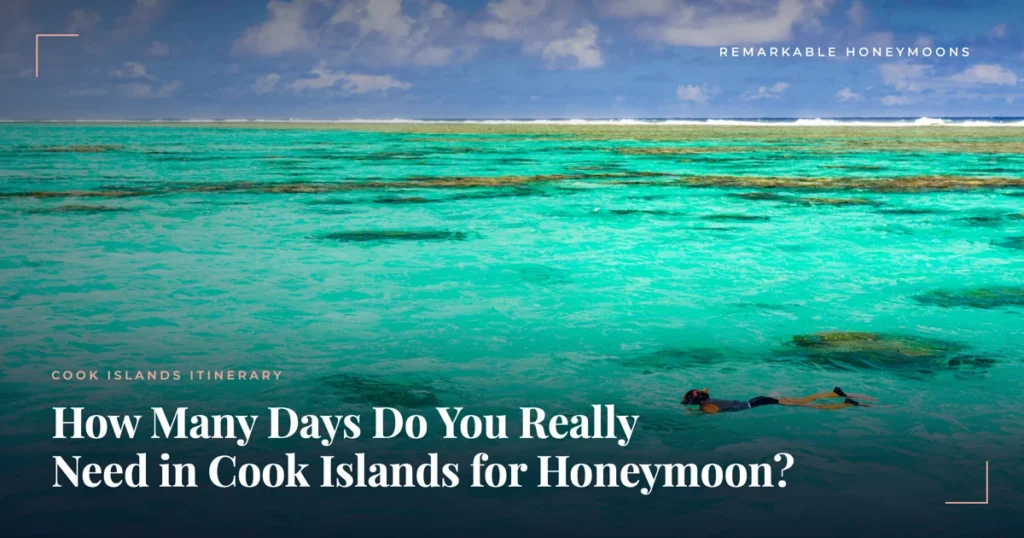
How Many Days Do You Need in the Cook Islands for a Honeymoon? One of the most important Cook Islands honeymoon decisions is not which resort to book. It is how much time to allow. Rarotonga and Aitutaki may look easy to combine, but every island change uses part of a day, international flights operate on specific schedules, and Aitutaki is exactly the kind of place where the best afternoon may be the one when you deliberately do nothing. For most honeymoon couples, we consider seven nights the practical minimum for combining Rarotonga and Aitutaki. Nine or ten nights is better, and 12 nights can create an especially relaxed trip. The right answer depends on how far you are traveling, how active you want to be, and whether you would rather see more or move less. Here is how we would think about the different trip lengths. If you are still weighing up the destination, our guide to why choose the Cook Islands for your honeymoon explains the appeal of combining Rarotonga and Aitutaki. Is 5 Nights Enough for the Cook Islands? Five nights is enough to visit the Cook Islands, but for a honeymoon we would usually choose one island rather than split the stay evenly between Rarotonga and Aitutaki. With only five nights, two hotel stays and an inter-island flight can make the trip feel fragmented, especially after a long journey from the United States. If the lagoon is your priority, we might focus on Aitutaki and use Rarotonga only as required by the international flight schedule. If dining, culture, hiking and easy island exploration matter more, Rarotonga may make more sense. For a honeymoon, we would rather do one island well than spend too much of a short trip packing. Is 7 Nights Enough for Rarotonga and Aitutaki? Yes. Seven nights is the shortest two-island honeymoon we generally feel comfortable recommending. A good starting point is three nights on Rarotonga and four nights on Aitutaki. 3 nights Rarotonga 4 nights Aitutaki Three nights on Rarotonga gives you two full days to settle in, explore and enjoy a few activities or dinners. Four nights on Aitutaki gives you three full days, which is enough for a lagoon cruise plus meaningful resort time. We prefer putting Aitutaki second because it naturally slows the trip down. After sightseeing and exploring on Rarotonga, finishing beside the lagoon feels like a honeymoon finale rather than simply another stop. A 9-Night Cook Islands Honeymoon Nine nights is one of our favorite lengths for a first Cook Islands honeymoon. We would often start with four nights on Rarotonga and five nights on Aitutaki. 4 nights Rarotonga 5 nights Aitutaki Four nights on Rarotonga allows room for a hike or lagoon activity, a cultural or dining experience, some independent island exploration and still a little unscheduled time. Five nights on Aitutaki makes the lagoon cruise only one part of the stay rather than the event around which everything else is squeezed. This balance works particularly well for couples who want both adventure and relaxation. A 10-Night Cook Islands Honeymoon Ten nights gives you even more flexibility and is a particularly comfortable length after a busy wedding. A four-night Rarotonga and six-night Aitutaki split works well for couples who want a very relaxed finish, while five nights on each island can be better for travelers who enjoy dining, exploring and a little more activity. The resort choice also matters. If you have invested in a special Aitutaki bungalow, private villa or premium beachfront room, we generally want enough nights to enjoy it rather than constantly leaving for activities. What About 12 to 14 Nights? With 12 to 14 nights, you can create a very relaxed honeymoon without feeling pressure to schedule something every day. One option is simply to extend both Rarotonga and Aitutaki. Another is to consider a third Cook Islands experience if you are genuinely interested in a more remote outer island. We would not add a third island merely to say you visited more places. A honeymoon is not a checklist. For many couples, six nights on Rarotonga and six nights on Aitutaki, or a similar split, will feel richer than repeatedly changing accommodations. How Long Should You Spend on Rarotonga? For most honeymooners, three to five nights is a good range. Three nights works if you want a compact introduction before moving on to Aitutaki. Four or five nights is better if you want to include several of the experiences that make Rarotonga different: hiking, snorkeling, a cultural evening, local markets, dining and time to explore the island independently. Rarotonga is only about 32 kilometers around, so you do not need a week to see the island. But seeing everything is not the goal. The extra nights create room to change plans, linger over lunch or spend an afternoon at the beach without feeling that you are missing something. The Cook Islands honeymoon experiences you most want to include can help you decide whether three nights or a longer stay makes sense. How Long Should You Spend on Aitutaki? We recommend at least three nights on Aitutaki, and four or five is better for most honeymooners. The flight from Rarotonga takes only about 50 minutes, but the island deserves more than a quick look. Cook Islands Tourism notes that many visitors who take the Aitutaki day trip wish they were staying longer. A full-day lagoon cruise will use most of one day. Once you add a resort day, perhaps a massage or private excursion, and time to explore the island itself, a two-night stay begins to feel very short. Aitutaki is precisely where we want couples to stop counting activities. If you are staying in a beautiful beachfront villa or premium bungalow, give yourself time to enjoy what you paid for. Should You Visit Aitutaki as a Day Trip? Air Rarotonga offers an established Aitutaki day-tour program from Rarotonga, and it can be an excellent option for travelers who genuinely cannot
Why Choose the Cook Islands for Your Honeymoon?

Why Choose the Cook Islands for Your Honeymoon? Some honeymoon destinations are designed around a single beautiful resort. The Cook Islands offer something different: the chance to combine a romantic South Pacific escape with enough freedom to explore beyond your hotel. That distinction matters. A honeymoon should include time to slow down, but doing exactly the same thing every day is not right for every couple. In the Cook Islands, you can spend one day exploring Rarotonga, another snorkeling in the lagoon, another trying local food, and then fly to Aitutaki and let the pace become almost impossibly relaxed. Discover the Cook Islands honeymoon experiences we would consider when bringing that balance to life. For couples who want turquoise water, Polynesian culture, boutique accommodations, and a sense of place—not simply a resort that could be anywhere in the tropics—the Cook Islands deserve serious consideration. Here are the reasons we think the destination works especially well for a honeymoon. 1. Two Very Different Honeymoon Experiences in One Trip Rarotonga and Aitutaki complement each other beautifully. Rarotonga is the larger and more active island. It has restaurants, markets, cultural experiences, hiking, snorkeling, lagoon activities and an easygoing island road that makes exploring simple. Aitutaki feels quieter and more secluded. Its huge turquoise lagoon is scattered with 15 small motu, or islets, and much of the experience revolves around the water. Cook Islands Tourism specifically describes Aitutaki as secluded and romantic, which is exactly why it works so well for honeymooners. That natural progression—from exploring to relaxing—is one of the strongest reasons to choose the Cook Islands. Our Cook Islands travel guide explains how to combine the two islands and plan the practical details. 2. The Destination Feels Romantic Without Feeling Manufactured The Cook Islands are undeniably romantic, but the appeal is not limited to rose petals and couples massages. The romance comes from the setting: uncrowded beaches, lagoon sunsets, small resorts, outdoor dinners, palm-lined roads and the feeling that you have traveled somewhere genuinely different. Both Rarotonga and Aitutaki offer boutique resorts, villas and adults-only options that work especially well for honeymooners. Many properties are small to medium-sized rather than large international resort complexes. That scale helps the islands retain a more personal, intimate feel. 3. Aitutaki Lagoon Is a Honeymoon Experience Worth Traveling For Aitutaki is not simply another pretty island. It sits around an extraordinary turquoise lagoon with 15 motu scattered across the water. Lagoon cruises typically include time to swim, snorkel and visit small islands such as One Foot Island. For many couples, this becomes the defining experience of the entire honeymoon. We usually recommend staying on Aitutaki rather than visiting only on a day trip from Rarotonga. A day trip can show you the lagoon, but several nights allow you to enjoy the quieter evenings, slower mornings and resort time that make Aitutaki feel genuinely romantic. 4. Rarotonga Gives You More Freedom Than a Traditional Resort Island Rarotonga is only about 32 kilometers around, so you can explore without spending hours in a vehicle. Couples can rent a small car, use taxis, ride bicycles or e-bikes, or take the clockwise and anticlockwise public buses around the island. That means you are not dependent on your resort for every meal or activity. You can go to a market, stop for lunch, find a beach, visit a local café or decide on the spur of the moment to watch the sunset somewhere else. For independent travelers who normally plan their own vacations but want their honeymoon logistics handled properly, this freedom can be especially appealing. For a closer look at the islands, getting around, and what to do, explore our Cook Islands travel guide. 5. There Is Enough Adventure Without Making the Honeymoon Exhausting A honeymoon does not have to mean sitting still for ten days. On Rarotonga, active couples can hike through the lush interior, snorkel, take lagoon excursions, cycle or simply explore the island at their own pace. Aitutaki offers snorkeling, lagoon cruises, kayaking, paddleboarding, fishing and diving, but it is equally easy to do nothing at all. The key is that the adventure is optional. You can schedule one memorable activity and then leave the following day completely open. 6. Food and Culture Are Part of the Trip The Cook Islands are a better fit for couples who want some connection to the destination than for travelers who never intend to leave the resort. Rarotonga has a surprisingly broad dining scene, from casual cafés and beach restaurants to more polished dinners. The Muri Night Market is an easy place to sample casual local food, while the Punanga Nui Market in Avarua is a good way to experience local food, crafts and everyday island life. Cultural evenings, local music and community-based dining experiences can also add depth to the honeymoon. These experiences give the trip texture and keep every evening from feeling identical. 7. You Can Find Luxury Without Losing the Sense of Place Luxury in the Cook Islands tends to be more relaxed than formal. There are beachfront villas, boutique adults-only retreats and high-end resorts, particularly on Rarotonga and Aitutaki. Aitutaki Lagoon Private Island Resort is adults-only and offers the only overwater bungalows in the Cook Islands, while Pacific Resort Aitutaki offers an intimate luxury-resort experience with beachfront bungalows and villas. The right choice depends on what luxury means to you. Some couples want a full-service resort with spa treatments and fine dining. Others would rather have a private villa, an excellent beach and enough space to disappear for a few days. The Cook Islands can accommodate both styles. 8. The Islands Work Well for Couples Who Dislike Crowds The Cook Islands feel noticeably smaller in scale than many well-known tropical destinations. That does not mean you will have every beach to yourself, particularly in popular areas such as Muri. It does mean the destination generally avoids the large-resort, high-rise atmosphere found in many heavily developed beach destinations. Aitutaki is especially good for couples who want
Cook Islands Travel Guide for Honeymooners

Cook Islands Travel Guide for Honeymooners: Rarotonga, Aitutaki & What to Know Before You Go The Cook Islands are one of the South Pacific’s most appealing choices for couples who want beautiful lagoons, Polynesian culture and a honeymoon that feels relaxed rather than overly resort-bound. Rarotonga and Aitutaki are the two islands most honeymooners combine, and they create very different experiences. Rarotonga is greener, livelier and easier to explore, with beaches, restaurants, markets, cultural experiences and a mountainous interior. Aitutaki is smaller, quieter and centered around one of the most extraordinary lagoons in the South Pacific. For many couples, that contrast is exactly what makes the Cook Islands work so well. This Cook Islands travel guide covers the practical decisions that matter most: how to get there, how to divide your time, what to do on each island, how to get around and what to know before you go. Cook Islands at a Glance The Cook Islands are a group of 15 islands spread across a vast area of the South Pacific, roughly between Hawaii and New Zealand. Rarotonga is the main island and the international gateway, while Aitutaki is approximately 220 kilometers north and about a 50-minute flight away. What makes the destination distinctive is its scale. Rarotonga is only about 32 kilometers around, there are no high-rise resorts, and the island is easy to explore beyond your hotel. The Cook Islands Tourism Corporation describes Rarotonga as being almost like one large resort because beaches, restaurants and activities are all within a relatively short distance. For honeymooners, this means you can have a beautiful resort stay without feeling as though you need to remain on the property for the entire trip. Rarotonga or Aitutaki: Which Is Better for a Honeymoon? We would rarely treat this as an either-or decision. If time allows, we prefer combining both. Rarotonga is the more active half of the trip. It has the widest choice of restaurants and accommodations, plus hiking, snorkeling, cultural experiences, markets, lagoon activities and easy island exploration. Aitutaki is where we would slow the pace. Its enormous turquoise lagoon, small motu and quieter atmosphere make it especially well suited to honeymooners who want several days of swimming, snorkeling, lagoon cruising and simply enjoying the resort. If you have seven nights, a combination such as three nights on Rarotonga and four nights on Aitutaki can work well. With nine or ten nights, we generally like giving each island enough time that neither portion feels rushed. The exact split depends on the resorts, flight schedule and how active you want the honeymoon to be. How Do You Get to the Cook Islands from the United States? Rarotonga International Airport is the gateway for international arrivals. Air access matters more here than it does for many destinations because some international routes operate only on certain days of the week. As of 2026, the Honolulu–Rarotonga nonstop operates weekly. There are also routings from the U.S. mainland through Tahiti, and Rarotonga has year-round service from Auckland. This is one of the reasons we build the air schedule first rather than choosing resort dates in isolation. A beautiful hotel itinerary is not useful if the international flights force an awkward extra night or an unnecessarily tight connection. For couples traveling from the United States, we look at the entire routing—not just the lowest fare—to balance travel time, connection risk, baggage logistics and the number of vacation days lost in transit. Getting from Rarotonga to Aitutaki Air Rarotonga operates the inter-island flights, and the flight from Rarotonga to Aitutaki takes about 50 minutes. Aitutaki can technically be visited as a day trip, and Air Rarotonga offers a day-tour program that combines flights with a lagoon cruise. For honeymooners, however, we strongly prefer an overnight stay—ideally several nights. The lagoon is the reason many couples come to the Cook Islands in the first place. Experiencing Aitutaki only between two flights can miss the best part: waking up there, having quiet evenings after day visitors leave and allowing enough time for both a lagoon cruise and unplanned downtime. How Many Days Do You Need in the Cook Islands? For a honeymoon combining Rarotonga and Aitutaki, seven nights is a practical minimum in our view. Nine or ten nights is even better if the air schedule and budget allow. For sample island splits and longer itineraries, see our guide to how many days you need in the Cook Islands. A shorter trip can work, but every island change uses part of a day. On a honeymoon, we would rather protect time at the destination than create an itinerary that looks impressive on paper but feels like constant packing and checking in. Couples with more time can also consider another Cook Islands destination, but Rarotonga and Aitutaki are the strongest first combination for most honeymooners. What to Do on Rarotonga Rarotonga is ideal for couples who want choices without a rigid sightseeing schedule. A few experiences worth considering include: Snorkeling in the lagoon and marine reserves A guided Cross-Island or Raemaru hike through the lush interior A lagoon cruise or water-based excursion A cultural evening or island-night performance The Punanga Nui Market in Avarua The Muri Night Market for casual local dining A progressive dinner experience in local homes Exploring the island by car, bicycle, e-bike or local bus We generally would not schedule something every day. Rarotonga is easy to explore spontaneously, and leaving room for a beach afternoon or an unplanned lunch is part of the appeal. What to Do on Aitutaki Aitutaki is less about building a long activity list and more about choosing a few memorable experiences. A lagoon cruise is the signature experience. The enormous lagoon contains small motu, snorkeling areas and brilliant stretches of shallow turquoise water. One Foot Island is one of the best-known stops on many lagoon itineraries. Beyond the lagoon, couples can cycle or scooter around the island, arrange fishing or diving, visit local cafés, book a massage or simply stay
Best Time to Visit Cook Islands For Honeymoon

The Best Time to Visit the Cook Islands for a Honeymoon The Cook Islands are the kind of destination that can feel wonderfully removed from everyday life. Rarotonga has lush volcanic scenery, beaches, restaurants and an easygoing local rhythm, while Aitutaki is home to one of the South Pacific’s most striking lagoons. For honeymooners, the question is not whether the Cook Islands are romantic. They are. The more useful question is when to go. For most couples, April through November offers the most consistently appealing weather, with drier conditions and comfortable temperatures. Within that window, April, May, September and October are especially attractive because they tend to balance warm weather with generally dry skies. That said, no single month is “perfect” for every honeymoon. The best time to visit the Cook Islands depends on whether you care most about warm lagoon water, lower humidity, whale watching, outdoor adventures or simply choosing dates that work best after your wedding. If you are still deciding whether the destination suits you, explore why choose the Cook Islands for your honeymoon. When Is the Best Time to Visit the Cook Islands? The Cook Islands have a warm tropical climate throughout the year, but there are two broad seasonal patterns: Drier season: April through November Warmer, more humid season: November through March Cook Islands Tourism reports that the drier months average around 26°C, or about 79°F. The warmer season brings higher humidity and more frequent tropical showers, particularly from December through March. Those showers are often brief rather than all-day rain. For many honeymoon couples, our favorite months are April, May, September and October. These shoulder months can provide a particularly appealing combination of warmth, drier weather and comfortable conditions for beaches, lagoon cruises and exploring. Cook Islands Weather From April Through May April and May are excellent months to consider for a Cook Islands honeymoon. By April, the destination is moving into its drier season. Daytime temperatures remain warm, but humidity begins to ease compared with the height of the South Pacific summer. May is slightly cooler, with average daytime highs around 27°C, or 81°F. Evenings can be comfortable enough for outdoor dining, and the weather suits a mix of beach time and exploring. For couples who want tropical warmth without the hottest and most humid conditions of the year, this is one of the strongest periods to consider. Cook Islands Weather From June Through August June, July, and August are the coolest months of the year in the Cook Islands, although “cool” is relative. Average daytime highs are generally around 25–26°C, or 77–79°F. Evening temperatures can dip into the mid-to-upper 60s°F, particularly in July and August, so a light layer can be useful after sunset. This is a comfortable time for hiking, cycling, lagoon excursions, and exploring Rarotonga without the stronger heat and humidity of summer. Our guide to Cook Islands honeymoon experiences can help you choose which activities to build into your stay. The lagoon remains inviting, although official climate information shows water temperatures around 24°C, or 75°F, during much of this period. Couples who strongly prefer very warm ocean water may favor the shoulder or summer months instead. July also marks the beginning of one of the Cook Islands’ most memorable seasonal experiences: humpback whale season. Cook Islands Weather From September Through October September and October are two of our favorite months for a Cook Islands honeymoon. The weather is generally dry, temperatures begin to warm gradually, and the destination still benefits from the more comfortable conditions associated with the drier season. September averages a daytime high of around 25°C, or 77°F, while October is closer to 26°C, or 79°F. Water temperatures are also beginning to rise as the Cook Islands move toward summer. These months are especially appealing for couples who want to spend plenty of time outdoors—snorkeling, cruising Aitutaki Lagoon, hiking on Rarotonga, dining outside or simply relaxing on the beach. September and October also overlap with humpback whale season, which generally runs from July through October. Cook Islands Weather From November Through March November through March is warmer and more humid. January and February are typically the warmest months, with average daytime highs around 29°C, or 84°F. Lagoon temperatures are also warmer, reaching approximately 27–28°C, or 81–82°F during the height of summer. This can be very appealing for couples who love warm evenings and warm water. The tradeoff is that this is also the wetter part of the year. Tropical showers become more common, especially from December through March. That does not mean it rains all day, every day. Cook Islands Tourism notes that summer rain often arrives as shorter tropical showers, followed by improving conditions. For honeymooners traveling during this period, we would simply plan with the season in mind. Build in some flexibility, avoid over-scheduling every day and choose resorts you will genuinely enjoy even if you spend a little extra time there. What Is the Best Time for a Cook Islands Honeymoon? If we were choosing purely for a honeymoon, we would put April, May, September and October near the top of the list. Those months offer an appealing balance of: Warm tropical weather Generally drier conditions Comfortable evenings Excellent beach and lagoon time Good conditions for outdoor activities Less intense humidity than the summer months June through August can also be beautiful, especially for couples who prefer slightly cooler temperatures. And if your wedding date naturally points you toward January, February or March, we would not automatically rule out the Cook Islands. You simply need to be comfortable with more humidity and a greater chance of tropical showers. The right honeymoon date is not always the month with the statistically driest weather. It is the month that best balances your wedding schedule, preferred experience, resort availability and tolerance for seasonal tradeoffs. When Is the Best Time to Visit Aitutaki? Aitutaki is only about a 50-minute flight from Rarotonga, but it feels remarkably remote once you arrive. Its enormous turquoise lagoon, tiny motu and
7 Beautiful Places and Experiences in Costa Rica That Belong on Your Travel List

7 Beautiful Places and Experiences in Costa Rica That Belong on Your Travel List Costa Rica has a way of making ordinary vacation moments feel extraordinary. A walk through the forest becomes a search for monkeys and toucans. A swim might take place beneath a waterfall. A quiet evening could mean soaking in warm water surrounded by tropical vegetation while Arenal Volcano rises in the distance. The country’s beauty isn’t concentrated in one famous landmark. It is found in rainforests, beaches, volcanoes, cloud forests and wildlife-rich stretches of coastline—and often in the experiences connecting them. If you’re planning your first Costa Rica vacation or honeymoon, these are seven places and experiences we think are worth considering. 1. Experience Arenal Volcano and Its Hot Springs Few places capture the Costa Rica experience quite like Arenal. The volcano’s distinctive shape dominates the landscape around La Fortuna, creating a spectacular backdrop for rainforest adventures. There are hiking trails, hanging bridges, waterfalls and zip-line courses throughout the region, but one of our favorite Arenal experiences happens after the exploring is finished. The area is known for its geothermally heated hot springs. Some are incorporated into resorts, while others can be visited independently. Settings range from elaborate thermal complexes to more intimate pools surrounded by tropical gardens. For honeymooners, Arenal works particularly well because the day can be adventurous without sacrificing romance. Hike in the morning. Soak in hot springs in the afternoon. Have dinner overlooking the rainforest. That’s a pretty good day. Why we love it: Arenal combines Costa Rica’s adventure, scenery and relaxation in one destination. 2. Walk Through the Monteverde Cloud Forest Costa Rica’s cloud forests feel entirely different from the tropical landscapes many travelers expect. At higher elevations around Monteverde, mist moves through dense vegetation and the temperature is noticeably cooler. The ecosystem supports an extraordinary variety of plants, birds and wildlife. Walking through the forest can be fascinating on its own, but travelers can also experience the canopy from hanging bridges or, for something considerably faster, a zip line. Birdwatchers may hope to spot the resplendent quetzal, although—as with all wildlife—nature doesn’t provide guarantees. Monteverde requires some effort to incorporate into an itinerary, so we wouldn’t automatically add it to every first Costa Rica trip. But for travelers who love forests, hiking and wildlife, it can be worth the extra stop. Why we love it: It shows a completely different side of Costa Rica from the beaches and lowland rainforest. 3. Look for Wildlife in Manuel Antonio National Park It is difficult to decide whether the beaches or wildlife are the bigger attraction at Manuel Antonio National Park. Fortunately, you don’t have to choose. The park protects tropical forest along Costa Rica’s central Pacific coast, and visitors may encounter monkeys, sloths, iguanas and an enormous variety of birds. This is one place where we strongly recommend considering a knowledgeable naturalist guide. An experienced guide can spot animals hidden in the trees that most visitors would walk directly past. After exploring the forest, the coastline provides a completely different reward. That combination of wildlife and beautiful beaches is what makes Manuel Antonio particularly appealing for first-time visitors. Why we love it: You can experience rainforest, wildlife and the Pacific without dedicating separate days to each. 4. See Costa Rica’s Pacific Coast From the Water Costa Rica looks different from offshore. A sailing or catamaran trip can provide a welcome change from hiking and land-based activities, particularly after several active days inland. Depending on where you’re staying, an afternoon on the water might include snorkeling, swimming and time along the coast before finishing with sunset over the Pacific. During certain times of year, travelers may also have opportunities to see dolphins or migrating humpback whales. For honeymooners, a sunset sailing excursion can be especially appealing because it feels special without requiring an entire day of scheduled activity. And sometimes the best perspective on a beautiful coastline is simply to move away from it for a few hours. Why we love it: It adds an easy, relaxing experience to an itinerary that may otherwise be filled with rainforest adventures. 5. Discover the Wildlife of the Osa Peninsula For serious nature lovers, the Osa Peninsula belongs in a category of its own. Located in southwestern Costa Rica, the Osa is home to Corcovado National Park and some of the country’s richest biodiversity. Scarlet macaws fly overhead. Monkeys move through the forest. Tapirs, sloths and countless other species inhabit the region. But the Osa isn’t simply another excursion to add between Arenal and the beach. It is remote, wild and deserving of several nights. Getting there requires more planning, and the experience tends to be more nature-focused than resort-focused. That is precisely why some travelers fall in love with it. If seeing wildlife in a genuinely immersive setting is one of the primary reasons you’re traveling to Costa Rica, we would seriously consider building the itinerary around the Osa rather than squeezing it in at the end. Why we love it: It offers one of Costa Rica’s most immersive wildlife and rainforest experiences. 6. Visit Río Celeste Some places really do look as though someone adjusted the color before you arrived. Río Celeste, located within Tenorio Volcano National Park, is famous for its striking blue water. The unusual color is created by a natural optical effect involving minerals suspended in the water—not artificial enhancement, despite what your photographs may look like afterward. A forest trail leads visitors through the park to viewpoints and the well-known Río Celeste waterfall. Conditions matter. Heavy rain can affect both the trail and how vivid the water appears, so this isn’t an experience we would build an entire vacation around. But when it fits naturally into the itinerary, Río Celeste can be a beautiful addition. Why we love it: It is visually spectacular but still feels rooted in Costa Rica’s volcanic landscape and rainforest. 7. Spend a Day With Nothing Planned at the Beach After volcanoes, cloud forests, wildlife
How Many Days Do You Really Need in Costa Rica?

How Many Days Do You Really Need in Costa Rica? Costa Rica may look small on a map, but that can be misleading when you start planning a trip. Arenal, Monteverde, Manuel Antonio, Guanacaste, the Osa Peninsula—there are plenty of places you may want to see. The temptation is to fit as many as possible into one vacation. We usually recommend the opposite. Costa Rica is a destination where travel time matters, and changing regions every couple of nights can quickly turn a relaxing vacation into a series of transfers and hotel check-ins. For most first-time visitors, 7 to 10 nights is a good starting point, with two regions often providing the right balance between experiencing the country and actually enjoying the vacation. With more time, you can slow down—or add another region without rushing. Here’s how we would approach it. Is Five Nights Enough for Costa Rica? Five nights can work, but you need to be selective. For such a short trip, we would generally choose one region rather than trying to combine several parts of the country. Arenal could fill five nights for travelers primarily interested in rainforest, hiking, hot springs and adventure. Guanacaste could work for someone whose priority is a resort-focused beach vacation with a few excursions. Manuel Antonio can combine beach and wildlife within one destination, making it another interesting choice for a shorter trip. What we would not recommend is spending two nights in Arenal, one night somewhere else and two nights at the beach. You would technically see more of Costa Rica. You probably wouldn’t enjoy it more. Is 10 Nights Better? For many travelers, 9 or 10 nights is our favorite amount of time for a first Costa Rica trip. You can still keep the itinerary to two regions and enjoy them at a wonderfully relaxed pace. Or you can introduce a third destination. For example: 3 nights Arenal + 3 nights Monteverde + 4 nights Guanacaste This creates three distinct experiences: volcano and rainforest, cloud forest, and Pacific beach. Another traveler might prefer: 4 nights Arenal + 6 nights Guanacaste That itinerary has fewer hotel changes and more downtime. Neither approach is automatically better. The right one depends on whether you would rather experience another region or have more time to settle into each place. What About 12 to 14 Nights? With nearly two weeks, Costa Rica opens up considerably. Three regions can be combined without making the trip feel rushed. You might pair Arenal and Monteverde with a Pacific beach, or combine an inland adventure with Manuel Antonio and a more relaxed resort stay. Travelers particularly interested in wildlife might use the additional time to venture farther south. The Osa Peninsula, for example, deserves more than a quick visit. Its remoteness is part of its appeal, but reaching it requires additional planning. With two weeks, you also have the luxury of adding nights rather than destinations. That distinction matters. Having 14 nights doesn’t mean you need four hotels. Sometimes the better itinerary is simply three excellent stops with enough time at each one. Should You Visit Four Regions in Two Weeks? You can, but we wouldn’t make it the default recommendation. Four regions in 14 nights means three separate travel days between hotels, in addition to your international arrival and departure days. That may be perfectly acceptable to an energetic traveler who likes to keep moving. For honeymooners and leisure travelers, we would usually lean toward three regions at most. Costa Rica rewards travelers who have time to slow down. An extra night in Arenal might allow you to move a hike because of rain. An extra beach day gives you time to enjoy the resort you’ve paid to stay at. An extra night in a wildlife area means another opportunity to see something you missed the day before. More destinations don’t automatically make a trip better. How Many Nights Do You Need in Arenal? We generally recommend three to four nights in Arenal. Three nights gives you two full days, which is enough for several major experiences. Four nights creates a more comfortable pace. You might spend one day exploring hanging bridges or hiking, another enjoying an adventure activity, and still have time for hot springs or simply relaxing at your hotel. Arenal’s weather can also be unpredictable, so an extra night gives you flexibility if clouds or rain disrupt your plans. For honeymooners, we particularly like having enough time to enjoy the hotel rather than treating it simply as a place to sleep between excursions. How Many Nights Do You Need in Monteverde? For most first-time visitors, two or three nights is appropriate. Monteverde offers cloud forest, birdwatching, hiking, hanging bridges and adventure activities, but you don’t necessarily need a long stay to appreciate the region. The bigger consideration is whether adding Monteverde makes sense within the overall itinerary. On a seven-night vacation, we would generally skip it rather than create three short stays. With 10 nights or more, it becomes much easier to incorporate. How Many Nights Do You Need in Guanacaste? We generally like four or five nights at the beach, particularly if Guanacaste comes at the end of an active itinerary. This is where you can finally slow down. You can certainly add excursions, sailing, snorkeling or other activities, but we wouldn’t fill every day. If you’ve chosen a beautiful resort, give yourself time to enjoy it. For honeymooners, this is particularly important. The final days of the trip should not necessarily be the busiest ones. How Many Nights Do You Need in Manuel Antonio? We would generally allow three to four nights. That provides time for the national park, wildlife experiences, beaches and some relaxation. Manuel Antonio works particularly well for travelers who want their beach destination to remain active and nature-focused. It feels different from finishing at a larger resort in Guanacaste. That difference is why we choose between them based on the traveler rather than automatically including both. How Much Time
Why Costa Rica Is an Incredible Honeymoon Destination

Why Costa Rica Is an Incredible Honeymoon Destination Some couples picture a honeymoon as a week on a beautiful beach. Others want adventure, wildlife, and places they have never experienced before. Costa Rica lets you have both. You can wake to views of a volcano, walk through the rainforest, soak in natural hot springs and then finish your honeymoon at a beautiful Pacific resort with nowhere you need to be. That contrast is what makes Costa Rica such an interesting honeymoon destination. It isn’t simply romantic because it is tropical. It allows couples to experience something together while still leaving plenty of room for relaxation. For honeymooners who want more than a traditional fly-and-flop beach vacation, Costa Rica deserves serious consideration. A Costa Rica Honeymoon Can Be as Active—or Relaxed—as You Want One of the best things about Costa Rica is its flexibility. An adventurous couple can fill their days with hiking, zip lining, rafting, surfing, and wildlife excursions. Another couple might prefer leisurely nature walks, spa treatments, hot springs and several quiet days at the beach. Most honeymooners fall somewhere in between. We generally like to build the more active experiences into the first part of the honeymoon and allow the trip to become progressively more relaxed. After months of wedding planning, finishing with several unscheduled days at a beautiful resort can feel particularly good. Arenal Creates a Memorable Beginning For many honeymooners, Arenal is an excellent place to start. The landscape immediately feels different from a traditional beach destination. Lush vegetation surrounds the region, and when the clouds cooperate, Arenal Volcano creates a dramatic backdrop. Couples can hike, walk across hanging bridges, visit waterfalls, zip line or explore the rainforest with a naturalist guide. Then there are the hot springs. After an active day, soaking in warm geothermal pools surrounded by tropical vegetation is about as appropriate for a honeymoon as an adventure destination gets. Several properties in the area incorporate hot springs, beautiful gardens, and volcano views into the resort experience, which means you don’t necessarily need to leave the hotel every day. Arenal gives the honeymoon a sense of adventure without requiring couples to sacrifice comfort. Then Slow Down at the Pacific After several days inland, the Pacific coast provides a natural change of pace. For couples looking for a more polished resort experience, Guanacaste and the Papagayo area are among the first places we consider. This is where Costa Rica can begin to feel more like a classic tropical honeymoon. Spend the day by the pool. Go to the beach. Book a spa treatment. Take a sunset cruise. Have dinner without needing to be anywhere afterward. The contrast with Arenal is part of what makes the combination work so well. You haven’t flown all the way to Costa Rica just to sit at a resort—but by the time you reach the beach, you may be very happy to do exactly that. Or Choose a More Natural Beach Experience Not every honeymooner wants a large luxury resort. Couples who prefer wildlife and a more natural setting might be drawn toward Manuel Antonio or farther south along the Pacific coast. Manuel Antonio combines beaches with rainforest and wildlife, giving couples the opportunity to see monkeys, sloths and tropical birds without giving up the coast. The Osa Peninsula takes the nature experience much further. Remote, biodiverse and considerably less resort-oriented, the Osa can be extraordinary for couples who view wildlife and wilderness as part of the romance. It isn’t right for everyone. But for the couple who would rather wake to the sounds of the rainforest than order room service from a large beach resort, it may be exactly right. Costa Rica Is Made for Shared Experiences There is something particularly memorable about doing something new together on a honeymoon. Maybe it is your first time zip lining through a forest canopy. Perhaps you spot a sloth during a guided nature walk or stand beneath a waterfall after a hike. You might learn to surf, cross a suspension bridge high above the forest floor or watch the sunset from a boat on the Pacific. These aren’t simply sightseeing stops. They become stories you share afterward. And that is one of the reasons we think Costa Rica works particularly well for honeymooners. The trip creates natural opportunities to do things together, not just visit beautiful places. Wildlife Adds an Element You Can’t Schedule Perfectly Costa Rica is home to extraordinary biodiversity. Depending on where and when you travel, you may encounter monkeys, sloths, toucans, sea turtles, whales and an enormous variety of other wildlife. But wildlife doesn’t work from an itinerary. You cannot guarantee that a sloth will be perfectly positioned beside the trail at 10:15 Tuesday morning. That’s part of the experience. A knowledgeable naturalist guide can dramatically improve your chances of spotting animals and understanding what you’re seeing. For honeymooners who care about wildlife, we would rather arrange one or two excellent guided experiences than pack every day with tours. Leave some room for unexpected encounters too. The Hotels Can Be Romantic Without Feeling Generic Costa Rica offers an appealing range of honeymoon accommodations. There are sophisticated beachfront resorts, intimate rainforest lodges, wellness-focused retreats and properties where the surrounding landscape is every bit as important as the room. For us, romance isn’t simply a bottle of sparkling wine and rose petals on the bed. It might be a private plunge pool overlooking tropical vegetation. A balcony facing Arenal Volcano. An outdoor shower surrounded by rainforest. A secluded beach. Or a resort where you can spend an entire afternoon together without feeling the need to leave. The right honeymoon hotel should enhance the destination rather than isolate you from it. Costa Rica Works Particularly Well for Couples Who Want Variety Some honeymoon destinations are best experienced from one resort. Costa Rica isn’t necessarily one of them. Moving between two carefully selected regions can make the honeymoon feel much more varied without making it hectic. A simple combination
Costa Rica for First-Time Visitors: How to Plan Your First Trip

Costa Rica for First-Time Visitors: How to Plan Your First Trip Costa Rica can look deceptively simple on a map. It is a relatively small country, and many travelers arrive thinking they can easily combine several beaches, a volcano, cloud forest, rainforest and wildlife reserves into one vacation. Then they begin looking at drive times. Mountains, winding roads and changing terrain mean that traveling between regions can take considerably longer than the distance suggests. A destination that looks close on a map may require several hours by road. That is why a successful first trip to Costa Rica isn’t about seeing as much of the country as possible. It’s about choosing two or three regions that work well together and giving yourself enough time to enjoy them. Start With the Kind of Costa Rica You Want to Experience Before choosing hotels or even destinations, think about what you want from the trip. Costa Rica can offer: Beaches and luxury resorts Rainforest and wildlife Volcanoes and hot springs Hiking and waterfalls Zip lining and adventure Surfing and snorkeling Wellness and relaxation Most first-time visitors want some combination of these. The trick is not trying to fit all of them into one week. For many travelers, a first Costa Rica trip works beautifully when it combines one inland nature or adventure destination with one beach region. With more time, adding a third area becomes much more realistic. Arenal: A Great Introduction to Costa Rica If you picture Costa Rica as lush rainforest, wildlife and adventure, Arenal is an excellent place to begin. Arenal Volcano dominates the landscape, and the surrounding region offers an enormous variety of activities. Travelers can hike, visit waterfalls, walk across hanging bridges, zip line through the forest or spend an afternoon relaxing in geothermal hot springs. This is also an area where the hotel can become part of the experience. Some properties offer beautiful views of the volcano, extensive gardens, hot springs or rainforest settings that make staying there feel distinctly Costa Rican. For first-time visitors, we generally like three or four nights in Arenal rather than treating it as a quick stop. You need enough time to explore—but also enough flexibility to work around changing tropical weather. Guanacaste: Beaches and Resort Time After several active days inland, heading toward the Pacific coast can completely change the pace of the trip. Guanacaste, in northwestern Costa Rica, is one of the country’s most established beach destinations and home to many of its higher-end resorts. This can be an excellent choice for travelers who want to finish their vacation with several days of swimming, relaxing by the pool and enjoying the resort. But Guanacaste isn’t just one beach. Different areas offer different atmospheres, from larger resort communities to quieter stretches of coastline. This is why we wouldn’t choose a Guanacaste hotel based solely on how it looks online. The location and surrounding area need to fit the way you want to spend your beach days. Manuel Antonio: Wildlife Meets the Pacific For travelers who don’t want a traditional resort-focused beach stay, Manuel Antonio offers something different. The region combines rainforest, beaches and wildlife, and Manuel Antonio National Park is known for animals such as monkeys and sloths along with coastal scenery. It can be particularly appealing for travelers who want to remain active rather than ending the trip with several days primarily at a resort. The trade-off is that Manuel Antonio can be popular, and the experience is very different from staying at a large luxury resort in Guanacaste. Neither is necessarily better. They simply suit different travelers. Monteverde: For Cloud Forest and a Different Kind of Adventure Monteverde introduces another side of Costa Rica. Instead of tropical beaches or lowland rainforest, travelers find cooler temperatures and cloud forest at higher elevations. Hanging bridges, hiking, birdwatching and zip lining are among the experiences that attract visitors here. Monteverde can be wonderful, but we don’t automatically include it in every first itinerary. Adding it means another hotel change and additional travel time. For someone with seven nights, we would usually rather give Arenal and the beach enough time than squeeze Monteverde between them. With a longer trip, however, it can be an excellent third region. The Osa Peninsula: Extraordinary but Not for Everyone The Osa Peninsula is one of Costa Rica’s most biologically rich regions and can be extraordinary for travelers who place wildlife and nature at the top of their list. It is also more remote. This isn’t usually where we start when someone says they want an easy first Costa Rica vacation with a little bit of everything. But for an adventurous traveler who wants an immersive nature experience, the Osa can become the centerpiece of the entire trip. This is an excellent example of why Costa Rica itineraries shouldn’t all look the same. Don’t Overlook the Caribbean Coast Many first-time itineraries concentrate almost entirely on the Pacific side. Costa Rica’s Caribbean coast offers a very different experience. The area around Puerto Viejo and the southern Caribbean has a distinctive culture, beautiful beaches, rainforest and wildlife. It also follows a different weather pattern from the Pacific coast, with September and October among its relatively drier periods. That can make the Caribbean particularly interesting when Pacific weather is less favorable. It won’t be right for every itinerary, but it shouldn’t automatically be ignored. How Many Places Should You Visit? This is where we would exercise restraint. For a trip of roughly seven nights, two regions are usually enough. With nine or ten nights, three regions can begin to make sense. With two weeks, you have considerably more flexibility—but we still wouldn’t recommend moving every two nights. A seven-night itinerary might look something like: 3 nights Arenal + 4 nights Guanacaste A longer trip could become: 3 nights Arenal + 3 nights Monteverde + 4 nights at the beach Those aren’t formulas every traveler should follow. They simply illustrate a comfortable pace. Later this week we’ll look more closely at
Best Time to Visit Costa Rica: A Month-by-Month Guide

Best Time to Visit Costa Rica: A Month-by-Month Guide Costa Rica is one of those destinations where timing can completely change the experience. Visit during the dry season and you may find long stretches of sunshine along the Pacific coast. Travel during the green season and the same landscape becomes intensely lush, waterfalls are fuller and wildlife experiences can be exceptional. Then there is the Caribbean coast, which follows a somewhat different weather pattern altogether. That is why choosing when to visit Costa Rica isn’t quite as simple as looking for the month with the least rain. For many first-time visitors, January through April offers the easiest combination of weather and travel conditions, particularly if your itinerary includes the Pacific beaches. But travelers willing to work around some rain can find beautiful scenery, fewer crowds and compelling wildlife experiences during other parts of the year. The best month depends on where you are going and what you want to do. Understanding Costa Rica’s Seasons Rather than four traditional seasons, most of Costa Rica has two: Dry season: roughly mid-December through April Green season: generally May through mid-December The Pacific side has the more pronounced dry and rainy seasons. Guanacaste, for example, is particularly dry from December through March, while September through November is part of its second rainy period. Visit Costa Rica But Costa Rica is filled with microclimates. Elevation, mountains and proximity to either coast can create very different weather within the same country. A rainy afternoon in one region does not mean the entire country is experiencing the same conditions. And the Caribbean coast deserves special attention: its relatively drier periods occur around February–March and September–October, meaning September can be rainy on the Pacific yet appealing on the Caribbean. Visit Costa Rica That regional variation is one of the most important things to understand before choosing your dates. January: Sunshine and Peak Season January is one of Costa Rica’s most popular travel months. The Pacific side is well into its dry season, making destinations such as Guanacaste and the Nicoya Peninsula particularly appealing for travelers looking for sunshine and beach time. January also works well for itineraries combining the beach with Arenal, where travelers can enjoy rainforest, adventure activities and hot springs. The trade-off is demand. Holiday travelers linger into early January, and desirable resorts can command premium rates during the dry season. Best for: First-time visitors, beaches, honeymoons and travelers prioritizing sunshine. February: One of Our Favorite Months February is an excellent time for a classic Costa Rica itinerary. The Pacific coast generally remains dry, while warm weather makes it easy to combine outdoor activities with several days at the beach. This is a particularly good month for couples who want to split their vacation between an inland destination such as Arenal and a Pacific-coast resort. The Caribbean also experiences one of its relatively drier periods around February and March. Visit Costa Rica Best for: Honeymoons, adventure, beaches and first trips to Costa Rica. March: Hot, Dry and Popular March is among the driest and hottest months on the Pacific side. For beach travelers, that can be exactly what they want. It’s also an excellent time for hiking, zip lining and other outdoor experiences, although temperatures in lower-elevation areas can become quite warm. Spring-break travel can increase demand, so couples looking for a quieter trip should pay attention to their exact dates. Best for: Beach vacations, families, outdoor activities and travelers who don’t mind warmer temperatures. April: A Month of Transition April can be a very good month, but timing matters. Early April may still feel firmly within the dry season, particularly along the Pacific. As the month progresses, conditions begin transitioning toward the green season. Semana Santa, or Holy Week, is also an important holiday period in Costa Rica and can bring significant domestic travel and increased demand. Visit Costa Rica For travelers with flexibility, April can offer a nice balance—especially outside the busiest holiday dates. Best for: Couples, beaches and travelers comfortable with changing seasonal conditions. May: The Green Season Begins May marks a noticeable change. Rain returns to much of the Pacific side, but that doesn’t necessarily mean days of nonstop rain. Green-season rainfall often comes in bursts, and mornings can still be excellent for exploring. The returning rain transforms landscapes that became dry during the preceding months. This can be a particularly appealing time for travelers who value lush scenery and lighter crowds more than guaranteed sunshine. It can also offer better value than peak dry-season travel. Best for: Lush scenery, fewer crowds, value and active travelers comfortable with some rain. June: Rainforest at Its Greenest By June, the green season is established. Expect rain, but also expect exactly what many travelers imagine when they picture Costa Rica: intensely green rainforest, flowing rivers and tropical vegetation. The key is scheduling intelligently. Plan hiking, wildlife tours and outdoor activities earlier in the day when possible, leaving afternoons more flexible. June isn’t the month we would automatically choose for someone whose only goal is a flawless beach vacation. But for a traveler interested in the rainforest side of Costa Rica, it can be rewarding. Best for: Rainforest, wildlife, adventure and travelers who don’t require perfect beach weather. July: A Green-Season Sweet Spot July can be an interesting compromise. Parts of the Pacific side can experience a temporary reduction in rainfall known as veranillo, or “little summer,” although conditions vary by region and year. Costa Rica’s official tourism information notes this seasonal reduction around July and August in Pacific areas. Visit Costa Rica July is also associated with the arrival of southern humpback whales into Costa Rica’s Pacific waters. Visit Costa Rica Families traveling during summer vacation should still expect some rain, but July can be a good option for those who want Costa Rica’s lush green-season scenery. Best for: Families, wildlife, lush landscapes and summer travelers. August: Wildlife and Green Landscapes August remains firmly within the green season. Pacific destinations can experience rain, often


