
7 Beautiful Places and Experiences in Italy That Belong on Your Travel List

7 Beautiful Places and Experiences in Italy That Belong on Your Travel List Beautiful places in Italy seem almost impossible to capture in photographs—the rolling hills of Tuscany, Lake Como framed by mountains, colorful villages clinging to the Amalfi Coast and Venice glowing in the early evening. But some of the best experiences in Italy aren’t simply places to see. They’re moments: taking a boat across a lake, spending an afternoon at a Tuscan winery, wandering through Rome after dinner or watching the sun disappear over the Mediterranean. If you’re searching for beautiful places in Italy to include in your trip, these experiences offer a starting point without trying to fit every famous destination into one itinerary. 1. Spend a Few Days in the Tuscan Countryside Tuscany is one of those destinations where the scenery is part of the experience. Rolling hills, vineyards, olive groves, cypress-lined roads and medieval hill towns create the landscape travelers imagine when they picture the Italian countryside. But Tuscany shouldn’t simply be treated as a sightseeing stop between Florence and Rome. Stay for a few nights. Choose a countryside hotel or historic estate. Visit a winery. Explore towns such as Pienza, Montepulciano or Montalcino. Have lunch somewhere with a view and don’t worry about rushing to the next attraction. For honeymooners, Tuscany also provides a welcome change of pace after several days of sightseeing in Rome or Florence. Sometimes the best Tuscany itinerary is the one with the least on it. Tuscany is also one of the beautiful places in Italy where slowing down can be just as rewarding s sightseeing. 2. See the Amalfi Coast From the Water The Amalfi Coast is spectacular from land, but seeing it from the water provides an entirely different perspective. From offshore, you can appreciate just how dramatically the villages and hotels are built into the cliffs above the Mediterranean. A private or small-group boat excursion can include time along the coastline, swimming stops and views of destinations such as Positano that are difficult to appreciate from the road. Depending on your itinerary, a day on the water might also incorporate Capri. For honeymooners, this is one experience where we often think spending a little more for a private excursion can be worthwhile. It creates a very different day from sightseeing by car or ferry. And after several busy days exploring Italy’s cities, being on the water can feel like a vacation within the vacation. The season can also make a significant difference to the experience, so it’s worth considering the best time to visit Italy 3. Experience Rome After Dark Rome’s famous landmarks deserve to be seen during the day, but don’t overlook the city after dinner. The temperature cools, piazzas fill with people and many of Rome’s monuments are beautifully illuminated. Take an evening walk past the Pantheon. Visit the Trevi Fountain. Wander through Piazza Navona or find a neighborhood restaurant and take the long way back to your hotel. You don’t necessarily need a formal tour. Part of the experience is simply having enough time in Rome that every hour doesn’t need to be scheduled. For couples, an evening walk through Rome can be every bit as memorable as one of the major sightseeing days. If you’re visiting Rome as part of your first trip, our guide to Italy for first-time visitors can also help you plan how to combine Italy’s major destinations. 4. Travel Across Lake Como by Boat Lake Como is best experienced from the water. Boats connect many of the towns around the lake and provide views of villas, gardens, mountains and waterfront villages along the way. Bellagio, Varenna and other lake communities can be explored as part of a leisurely day, but we recommend resisting the urge to see every possible town. Choose a few places that interest you and leave enough time to enjoy them. For honeymooners, a private boat experience can be especially memorable, but even simply using the lake’s ferry system gives you an entirely different perspective from traveling by road. Lake Como isn’t a destination that needs to be rushed. Much of its appeal comes from the scenery and slower pace. It’s easy to see why Lake Como is often included among the most beautiful places in Italy, particularly for travelers looking for scenery, elegant hotels and a slower pace. 5. Wake Up in Venice Venice is one of the most visited cities in Italy, but staying overnight allows you to experience a side that day visitors can easily miss. Wake up early and walk before the busiest part of the day begins. Or stay out after dinner, when many visitors have departed and quieter canals and streets take on a completely different atmosphere. Of course, see St. Mark’s Square, the Doge’s Palace and the Grand Canal. But also give yourself permission to wander without a specific destination. Venice is particularly good at rewarding travelers who get a little lost. How long you stay here will depend on the rest of your itinerary, which is why it’s helpful to consider how many days in Italy you have before deciding how many destinations to include. For honeymooners, arriving by private water taxi can also be a memorable introduction. Pulling up to a hotel by boat feels distinctly Venetian—and is certainly more romantic than arriving in an ordinary taxi. 6. Eat and Drink Your Way Through Italy Italian food isn’t one cuisine. It changes enormously from region to region, which means food can become part of the itinerary rather than simply something you eat between sightseeing stops. Tuscany is known for its wines and rustic cooking. Emilia-Romagna is associated with foods such as Parmigiano Reggiano, prosciutto di Parma and traditional balsamic vinegar. Naples is inseparable from pizza. Sicily has its own distinctive culinary traditions shaped by centuries of cultural influences. Consider adding a cooking class, market visit, winery experience or food tour to the trip. But don’t schedule every meal as an “experience.” Some of the best moments may
How Many Days Do You Really Need for a Trip to Italy?

How Many Days Do You Really Need for a Trip to Italy? One of the first questions we hear when planning an Italy vacation is: How many days in Italy do I really need? For most first-time visitors, 10 to 14 days is an ideal amount of time for Italy. If you’re wondering how many days in Italy you really need, this range gives you enough time to experience several destinations without turning the trip into a series of train rides, hotel check-ins and hurried sightseeing days. Can you visit Italy in a week? Absolutely. But you’ll need to be selective. Have two weeks? You’ll have considerably more flexibility—and, in our opinion, a much better opportunity to experience Italy at the pace it deserves. The real question isn’t simply how many days in Italy you have. It’s how you use them. If this is your first trip, our guide to Italy for First-Time Visitors can help you understand what to expect and how to plan your time. When deciding how many days in Italy you need, it helps to think about how many destinations you want to experience and how much time you want to spend in each one. A shorter trip can work beautifully when you focus on one or two areas, while a longer stay gives you more flexibility. Is 7 Days Enough for Italy? Seven days can make a wonderful Italy vacation, but we recommend limiting the trip to one or two primary destinations. A first-time itinerary might look like: Rome — 3 nightsFlorence — 4 nights Or perhaps: Rome — 3 nightsAmalfi Coast — 4 nights Another option is to choose one region and explore it more thoroughly rather than trying to cover the country. For example, you could spend the week between Florence and the Tuscan countryside or concentrate entirely on Sicily. What we would not recommend is trying to fit Rome, Florence, Venice and the Amalfi Coast into seven days. Technically, you could get to all of them. That doesn’t mean you should. If you’re asking how many days in Italy is enough for a first visit, seven days can give you a wonderful introduction, but you’ll need to be selective about where you go. Is 10 Days Enough for Italy? Yes. Ten days is a very good amount of time for a first trip to Italy. With thoughtful planning, you can usually combine three destinations without feeling as though you’re constantly moving. A classic itinerary might be: Rome — 3 nightsFlorence — 3 nightsVenice — 3 nights Or, for travelers who want a combination of culture and relaxation: Rome — 3 nightsTuscany — 3 nightsAmalfi Coast — 4 nights Honeymooners might prefer the second option because it balances sightseeing with countryside and coastal downtime. Ten days still requires some discipline. Adding “just one more stop” can quickly turn a well-paced itinerary into a rushed one. For travelers wondering how many days in Italy they should plan for, 10 days is often a comfortable starting point. It gives you enough time to experience several destinations while avoiding an itinerary that feels too rushed. Is 14 Days Enough for Italy? For many travelers, two weeks is the sweet spot. Fourteen days gives you the flexibility to visit several parts of Italy while still allowing three or four nights in many destinations. For example: Venice — 3 nightsFlorence — 3 nightsTuscany — 3 nightsRome — 4 nights Or: Rome — 3 nightsFlorence — 3 nightsTuscany — 3 nightsAmalfi Coast — 4 nights You could also build an itinerary around northern Italy: Venice — 3 nightsDolomites — 4 nightsLake Como — 4 nightsMilan — 2 nights With two weeks, the advantage isn’t simply that you can add another destination. You can also slow down. That extra night in Tuscany or Lake Como may ultimately be more enjoyable than adding another city. If you have two weeks available, how many days in Italy you spend in each destination becomes easier to balance. Fourteen days gives you the opportunity to see more while still allowing time to slow down and enjoy the experience. What About a Three-Week Trip to Italy? With three weeks, Italy opens up considerably. You could combine northern, central and southern Italy, spend more time exploring one region or incorporate destinations that are harder to justify on a shorter trip. A longer itinerary might include Rome, Tuscany, Venice and Lake Como, or you could travel south and devote substantial time to the Amalfi Coast, Puglia or Sicily. Three weeks also allows you to build in more unscheduled days, which can make a long trip feel less exhausting. But even with three weeks, we wouldn’t recommend changing hotels every night or two. More time should create more freedom—not simply a longer list of places to check off. How Many Nights Should You Spend in Rome? For most first-time visitors, we recommend at least three nights in Rome. Four nights is even better if you want to explore the major historical sites without packing every day with tours. Rome has an enormous amount to see: the Colosseum, Roman Forum, Vatican Museums, St. Peter’s Basilica, Pantheon, Trevi Fountain and numerous neighborhoods worth exploring. But Rome is also a city to experience. Leave time for a leisurely dinner, an evening walk or an afternoon when you aren’t moving from one scheduled attraction to another. How Many Nights Should You Spend in Florence? Three nights works well for many first-time visitors. That gives you time to see Florence’s major sights while still enjoying the city itself. If you’re particularly interested in Renaissance art, food or museums, four nights can easily be justified. Florence can also serve as a base for some nearby excursions, although travelers who really want to experience Tuscany should consider staying in the countryside rather than treating the entire region as a day trip. How Many Nights Should You Spend in Tuscany? We generally like three or four nights in the Tuscan countryside. This is a destination
Why Italy Is an Incredible Honeymoon Destination
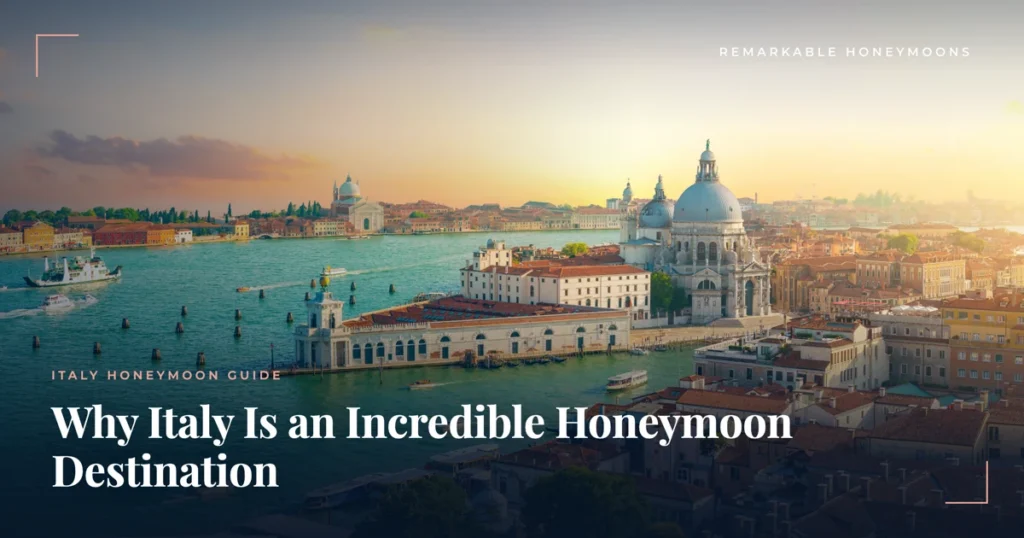
Why Italy Is an Incredible Honeymoon Destination An Italian honeymoon offers nearly everything we look for in a great honeymoon destination: romantic hotels, extraordinary food and wine, beautiful scenery, fascinating cities and enough variety to create a trip that feels completely personal. You can wake up overlooking the rooftops of Rome, spend a few days at a vineyard hotel in Tuscany and finish your Italy honeymoon with a terrace overlooking the Mediterranean. Or you can combine Venice, the Italian Lakes and the Dolomites for an entirely different experience. That’s one of the reasons we love planning honeymoons in Italy. There isn’t one standard Italy honeymoon. The country gives us the flexibility to build a trip around the couple rather than fitting the couple into a predetermined itinerary. Planning your first trip to Italy can be both exciting and overwhelming. Rome, Florence, Venice, Tuscany, Lake Como, the Amalfi Coast, Sicily—the list of places worth visiting is long, and the temptation is to try to fit too many of them into one vacation. For most first-time visitors, the best Italy itinerary isn’t the one that covers the most ground. It’s the one that gives you enough time to experience each destination without spending too much of your vacation packing, checking out of hotels and traveling between cities. The key is deciding what matters most to you, choosing destinations that work well together and allowing enough time in each place to actually enjoy being there. Why Honeymoon in Italy? An Italy honeymoon combines romance with an enormous variety of experiences, making it possible to create a trip around your interests and travel style. For some couples, the appeal is obvious: candlelit dinners, beautiful hotels, wine tasting in Tuscany and evenings overlooking the Amalfi Coast. But an Italy honeymoon can be much more than that. Couples interested in art and history can spend days exploring Rome and Florence. Food lovers can build an itinerary around regional cuisine and wine. Active travelers can hike in the Dolomites or explore the Italian countryside. Couples who simply want to relax can spend several days beside Lake Como or the Mediterranean. That flexibility is one of the reasons an Italy honeymoon can feel so personal. And you don’t necessarily have to choose just one style of honeymoon. A well-planned itinerary can combine several of them. Rome: History, Energy and Romance Rome makes for a wonderful beginning or ending to an Italy honeymoon. There are the obvious sights—the Colosseum, Roman Forum, Pantheon and Vatican—but some of our favorite moments in Rome happen between the landmarks. Walk through a neighborhood in the evening, stop for an aperitivo, find a small restaurant for dinner and take another walk when the monuments are illuminated. For honeymooners, hotel location is particularly important. Staying somewhere that allows you to walk out the door and immediately experience Rome can add tremendously to the trip. We generally recommend giving Rome enough time that it doesn’t become a race from one major attraction to another. Florence: Art, Food and the Heart of Tuscany The city of Florence works beautifully for a honeymoon in Italy because it offers world-class art and history in a relatively compact historic center. You can visit Michelangelo’s David, see masterpieces at the Uffizi Gallery, cross the Ponte Vecchio and still have time for a leisurely dinner. Florence is also a natural gateway to Tuscany, making it easy to combine culture and sightseeing with a more relaxing Italian honeymoon experience in the countryside. Couples with enough time can combine a few nights in Florence with a countryside stay, creating two very different experiences without traveling a great distance. Tuscany: Slow Down and Enjoy Italy If Rome and Florence provide the sightseeing, Tuscany provides the exhale. A Italy honeymoon in the Tuscan countryside can mean vineyard hotels, historic estates, hill towns, wine tastings, cooking experiences and long lunches overlooking landscapes that seem almost designed for romance. This is one place where we often encourage couples not to over-schedule. You don’t need an excursion every day. Sometimes the point of choosing a beautiful countryside hotel is having time to enjoy it. For couples who want their Italy honeymoon to include food, wine and relaxation, Tuscany can be one of the highlights of the entire trip. The Amalfi Coast: Italy’s Classic Honeymoon Escape Few places deliver the visual drama of the Amalfi Coast. Cliffs drop toward the Mediterranean, villages cling to the hillsides and hotels take advantage of the scenery with terraces, gardens and spectacular sea views. Positano is perhaps the most recognizable honeymoon destination along the coast, but it isn’t automatically the right base for every couple. Ravello offers a quieter atmosphere high above the sea, while other locations can provide easier access or a different style of hotel. This is also an area where the hotel and room category matter. For a special Italy honeymoon, paying attention to whether a room actually has the sea view, balcony or terrace you envision can be far more important than simply choosing the hotel with the most recognizable name. Capri: Glamour, Scenery and Island Romance Capri can be visited as a day trip, but couples on an Italian honeymoon may enjoy the island much more by staying overnight. Once many day visitors depart, the atmosphere changes. Couples can enjoy evenings in Capri town, beautiful hotels, boat excursions and time to experience the island without trying to fit everything between ferry arrivals and departures. Capri can work particularly well as part of an itinerary that already includes Naples, Sorrento or the Amalfi Coast. Lake Como: Elegant and Relaxed Lake Como offers another side of Italy. Instead of Mediterranean beaches and coastal villages, you’ll find mountain scenery, elegant villas, waterfront towns and historic hotels overlooking the lake. Days can be spent exploring towns by boat, visiting gardens, having lunch beside the water or simply enjoying your hotel. For couples who want a sophisticated honeymoon in Italy with beautiful scenery but a somewhat slower pace, Lake Como can be an
Italy for First-Time Visitors: How to Plan Your First Trip

Italy for First-Time Visitors: How to Plan Your First Trip Planning your first trip to Italy can be both exciting and overwhelming, especially for first-time visitors trying to decide where to go and how much to see. Rome, Florence, Venice, Tuscany, Lake Como, the Amalfi Coast, Sicily—the list of places worth visiting is long, and the temptation is to try to fit too many of them into one vacation. For most first-time visitors, the best Italy itinerary isn’t the one that covers the most ground. It’s the one that gives you enough time to experience each destination without spending too much of your vacation packing, checking out of hotels and traveling between cities. The key is deciding what matters most to you, choosing destinations that work well together and allowing enough time in each place to actually enjoy being there. Where Should First-Time Visitors Go in Italy? For first-time visitors, Rome, Florence and Venice are popular for good reason. Together, they offer an extraordinary introduction to Italian history, art, architecture and food. But they aren’t the only option. A couple planning a romantic trip might prefer Rome, Tuscany and the Amalfi Coast. Travelers interested in food and wine might spend more time in Tuscany or Emilia-Romagna. Someone who wants spectacular scenery and elegant hotels might combine Venice with the Dolomites or the Italian Lakes. Rather than starting with a list of cities you think you are supposed to visit, start with the experiences you want from the trip. Do you want museums and history? Countryside and wineries? Beaches and coastal villages? Food and cooking? Romantic hotels? A combination? Those answers should shape the itinerary. How Many Places Should You Visit in Italy? For first-time visitors to Italy, this is one of the most important decisions to make when planning to visit Italy. A common mistake is trying to fit four, five or even six destinations into a relatively short vacation. Italy may look compact on a map, but every hotel change consumes time. You have to pack, check out, get to the train station or meet your driver, travel, reach the next hotel, check in and unpack again. A two-hour train ride can easily consume much more than two hours of your day. For a trip of around 10 days, we generally prefer three well-chosen destinations rather than four or five rushed ones. With two weeks, you can comfortably introduce another region or slow the pace and spend longer in the places you visit. The goal shouldn’t be to say you’ve been everywhere. It should be to come home feeling like you have experienced Italy. Read more about How many days do we really need in Italy? A Classic First-Time Italy Itinerary This classic route is a popular starting point for Italy for first-time visitors who want to experience several of the country’s most famous destinations. For travelers who want to see several of Italy’s most famous destinations, a classic itinerary might look something like: Rome — 3 nightsAncient history, the Vatican, lively neighborhoods and wonderful restaurants make Rome an excellent place to begin. Florence — 3 nightsFlorence provides a completely different experience, with Renaissance art and architecture, walkable historic streets and easy access to Tuscany. Venice — 2 or 3 nightsVenice is unlike anywhere else in Italy. Staying overnight rather than visiting as a day trip allows you to experience the city after many daytime visitors have left. With additional time, you could add several nights in Tuscany, Lake Como or another region that complements your interests. This is only one framework. There is no reason every first-time visitor has to follow the same route. Should You Include the Amalfi Coast on Your First Trip? Absolutely—if the season and length of your trip make sense. For Italy for first-time visitors, the Amalfi Coast can be a wonderful contrast to several days of sightseeing in Rome and Florence. Instead of adding another major city, you finish the trip overlooking the Mediterranean. For honeymooners in particular, we often prefer this kind of balance. A trip might combine: Rome → Florence or Tuscany → Amalfi Coast That gives you history and culture, beautiful countryside and a relaxing coastal finish without trying to cover the entire country. The Amalfi Coast is seasonal, however, so when you travel matters. Late spring through early fall generally makes the most sense for travelers who want the full coastal experience. Should You Stay in Florence or the Tuscan Countryside? They are very different experiences, and sometimes the best answer is both. Florence is ideal for travelers who want art, architecture, restaurants and the ability to walk out of their hotel and immediately explore. The Tuscan countryside is about slowing down. Think vineyard views, small hill towns, long lunches, wine tastings and beautiful country hotels. If your schedule allows, spending a few nights in Florence followed by a few nights in the countryside can work beautifully. If time is limited, decide which experience matters more rather than trying to squeeze both into a single night or two. What Is the Best Way to Travel Around Italy? For Italy for first-time visitors, Italy’s rail system makes traveling between many major cities relatively easy. High-speed trains are particularly useful for routes such as: Rome to Florence Florence to Venice Rome to Naples Milan to Florence Milan to Venice For many first-time itineraries, trains combined with private transfers are preferable to renting a car. A private driver can make sense for countryside destinations, certain coastal areas and days when you want to stop somewhere en route. A rental car can be useful in some rural areas, but it is often unnecessary—and sometimes inconvenient—in major Italian cities. Historic centers may have restricted traffic zones, parking can be difficult, and a car becomes something you have to manage rather than an advantage. We generally don’t recommend driving simply because it appears to be the easiest way to connect dots on a map. Do You Need to Book Italian Trains in Advance? For
The Best Time to Visit Italy: Weather, Seasons & When to Go
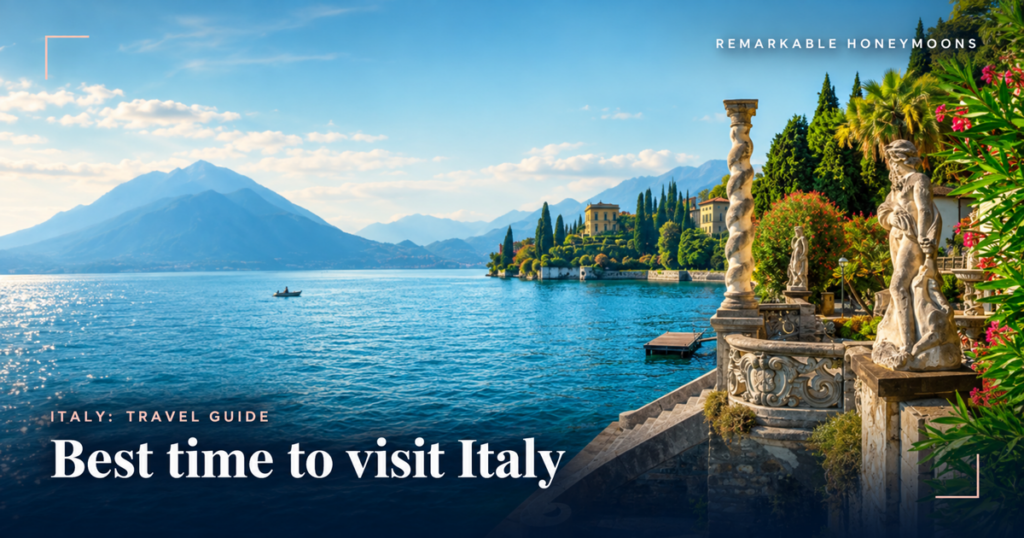
The Best Time to Visit Italy: Weather, Seasons & When to Go Italy is one of those rare destinations that can be wonderful at almost any time of year. The best time to visit Italy depends less on finding one perfect month and more on deciding what you want your trip to look like. For many travelers, May, June, September and early October offer an appealing combination of pleasant weather and long days. Spring brings flowers and green countryside, summer is ideal for coastal escapes and the Italian lakes, and fall offers beautiful weather in many regions along with harvest season and a slower pace. Italy also varies tremendously from north to south. A perfect month for hiking in the Dolomites may not be the best choice for a honeymoon on the Amalfi Coast. Likewise, Sicily can remain appealing well after temperatures have cooled considerably in northern Italy. Here is how to choose the best time of year for your trip. When Is the Best Time to Visit Italy? For a classic first trip combining destinations such as Rome, Florence, Tuscany and the Amalfi Coast, late spring and early fall are generally our favorite times to travel. May and June bring warmer days and beautiful landscapes, while September and early October can be especially appealing for couples who want warm weather without traveling during the height of summer. These periods are popular, however. Italy’s most famous cities and coastal destinations can still be busy, so traveling outside July and August should not automatically be confused with traveling during a quiet season. For honeymoons, we especially like May, June, September and early October, depending on the itinerary. If you are planning to visit Italy for the first time, then you should read our upcoming guide for Italy for First-Time Visitors: How to Plan Your First Trip Visiting Italy in Spring: March Through May Spring is one of the most beautiful seasons in Italy. The countryside turns green, flowers begin blooming, and temperatures become increasingly comfortable as the season progresses. Italy’s official tourism site specifically highlights spring for its favorable climate and outdoor experiences. March can still be cool and unpredictable, particularly in northern Italy. By April, temperatures generally become more comfortable, although rain is still possible. May is one of our favorite months for Italy. Tuscany is beautiful, sightseeing weather is typically pleasant, and coastal destinations begin settling into their summer rhythm. Spring is particularly good for: Rome and Florence Tuscany and Umbria Venice Lake Como and the northern lakes later in the season Amalfi Coast beginning in spring Honeymoons combining cities, countryside and coast Keep in mind that Easter and other national holidays can affect crowds, transportation schedules and opening hours. Italy observes national holidays including Easter Monday, April 25 and May 1, so dates are worth considering when planning a spring itinerary. Visiting Italy in Summer: June Through August Summer delivers long days, warm temperatures and Italy’s classic Mediterranean vacation atmosphere. June can be an excellent month, particularly for honeymoons that include coastal destinations or the Italian lakes. As July and August arrive, temperatures and visitor numbers increase substantially in many of the country’s best-known destinations. Summer works particularly well for: Amalfi Coast Capri Sardinia Sicily’s beach destinations Italian Lakes Dolomites and mountain areas Longer itineraries incorporating the coast July and August can be very hot in cities such as Rome and Florence, making full days of sightseeing more tiring. August also requires additional planning. Ferragosto on August 15 is a major Italian holiday, and August is traditionally an important vacation period for Italians themselves. Some businesses may close or operate differently around the holiday, while beach destinations can be extremely busy. Italy’s official tourism information identifies August 15 as a national holiday and notes that national holidays can affect normal business operations. For travelers whose priority is museums, historic cities and extensive sightseeing rather than beaches, we often prefer another month. Visiting Italy in Fall: September Through November Fall is another favorite season for Italy, especially for couples and honeymooners. September is one of the strongest all-around months for an itinerary combining cities, countryside and coastal destinations. The weather is often still warm, while the intense heat of midsummer begins to ease. October can be wonderful as well, particularly in Rome, Florence, Tuscany and other central Italian destinations. Harvest season also brings a special atmosphere to wine regions and rural areas. Italy’s official tourism site highlights autumn for countryside, food-and-wine experiences and exploring destinations after the peak of summer. As you move later into October and November, however, weather becomes less predictable and some seasonal coastal hotels, restaurants and services begin winding down. Fall is particularly appealing for: Tuscany and wine country Rome and Florence Venice Food and wine experiences Sicily Honeymoons focused on culture, food and romance If the Amalfi Coast or another beach destination is a major part of the trip, we generally favor September or early October rather than late fall. Visiting Italy in Winter: December Through February Winter is often overlooked, but it can be a rewarding time to experience a different side of Italy. Cities such as Rome, Florence and Venice remain culturally rich year-round, while northern Italy and the Dolomites enter ski season. December also brings Christmas markets, holiday decorations and seasonal traditions. Winter can be a good choice for travelers who prioritize: Museums, art and history Food-focused trips Christmas markets and holiday atmosphere Skiing in northern Italy Fewer peak-season visitors in major cultural cities The tradeoff is shorter daylight hours, cooler weather and limited seasonal operations in many coastal resort areas. For a traditional honeymoon featuring the Amalfi Coast, Capri or the Italian lakes, we would generally choose another season. Best Time to Visit Rome, Florence and Venice For Italy’s major cultural cities, April through June and September through October generally offer a good balance of weather and sightseeing conditions. Rome and Florence can become particularly hot during July and August. Venice can also be very busy during the summer
7 Beautiful Places and Experiences in Hawaii That Belong on Your Travel List

7 Beautiful Places and Experiences in Hawaii That Belong on Your Travel List Hawaii is filled with places that look almost too beautiful to be real. But the experiences we remember most aren’t always the ones with the most famous names. Sometimes it’s standing above the clouds on Maui as the landscape changes around you. Sometimes it’s seeing Kauaʻi’s Nāpali Coast from the water for the first time. Or watching the sky darken over the Big Island before slipping into the ocean for an unforgettable encounter with manta rays. Hawaii rewards travelers who venture beyond the resort—but it also rewards those who know when to slow down and simply appreciate where they are. If you’re planning your first trip, honeymoon or return visit, these are seven places and experiences we think deserve a place on your Hawaii travel list. 1. Experience the Nāpali Coast on Kauaʻi Few landscapes capture the drama of Hawaii quite like Kauaʻi’s Nāpali Coast. Towering emerald cliffs rise above the Pacific, interrupted by deep valleys, waterfalls and beaches that feel remarkably remote. One of our favorite ways to experience the coast is from the water. A boat trip gives you an entirely different perspective than you get from land. Depending on the season and conditions, excursions may include snorkeling and opportunities to see marine life along the way. Seeing the Nāpali Coast from above can be equally spectacular. A helicopter or small-aircraft flight reveals valleys and waterfalls that are otherwise extremely difficult—or impossible—to reach. For experienced hikers, the coast can also be explored on foot, although this requires considerably more planning and preparation. However you experience it, Nāpali is one of those places where photographs don’t quite convey the scale. Why we love it: It delivers exactly the kind of extraordinary scenery travelers hope to find in Hawaii. 2. Explore Haleakalā on Maui Maui’s beaches may get most of the attention, but Haleakalā National Park shows an entirely different side of the island. The summit rises more than 10,000 feet above sea level, and the landscape near the top can feel almost otherworldly. Sunrise is famous, but it isn’t the only way to experience Haleakalā. For some travelers, visiting later in the morning or toward sunset can be equally memorable—and considerably easier than beginning the day in the middle of the night. The drive itself takes you from tropical Maui through changing vegetation and eventually into a stark volcanic environment high above the clouds. Temperatures at the summit can be dramatically cooler than they are at the beach, so this is one Hawaii excursion where bringing warm layers is important. Why we love it: In just a few hours, you can travel from a tropical beach to a landscape that feels like another world. 3. Spend a Day Exploring Hawaiʻi Volcanoes National Park The Big Island’s Hawaiʻi Volcanoes National Park is unlike almost anywhere else in Hawaii. The park protects landscapes shaped by two of the world’s most active volcanoes, Kīlauea and Mauna Loa. What you can see changes over time because volcanic activity changes. That is part of what makes the park so fascinating. Even when there is no visible eruption, visitors can explore volcanic craters, lava fields, rainforest, overlooks and trails that reveal how dramatically the island has been shaped by geology. This is not an excursion we recommend rushing. The Big Island is much larger than many first-time visitors expect, and driving from the Kona-Kohala resort areas to the national park takes time. Build the day around the experience rather than trying to squeeze it between other activities. Why we love it: Hawaii is often described in terms of beaches and palm trees. This is a powerful reminder that these islands were—and continue to be—created by volcanoes. 4. Snorkel or Swim With Manta Rays on the Big Island There are wildlife encounters, and then there are experiences you talk about for years afterward. The Big Island’s nighttime manta ray experience belongs in the second category. After dark, lights placed in the water attract plankton, which in turn attracts manta rays. Travelers can snorkel or, for certified divers, dive while these enormous animals glide through the illuminated water. Their size can be startling, but manta rays are not aggressive and do not have stingers. Watching one pass beneath you can be extraordinary. This experience isn’t appropriate for everyone. You need to be comfortable in the ocean after dark, and conditions can vary. Choosing a reputable operator and understanding the physical requirements beforehand are important. For travelers who are comfortable in the water, however, this can easily become one of the highlights of the entire Hawaii trip. Why we love it: It is a genuinely distinctive Big Island experience rather than something that can be duplicated on every tropical vacation. 5. Discover Waimea Canyon on Kauaʻi Kauaʻi isn’t only about its coastline. On the island’s west side, Waimea Canyon stretches across a landscape of deep valleys, ridges and colorful rock formations. Often nicknamed the “Grand Canyon of the Pacific,” it offers a completely different perspective on the Garden Island. Several overlooks make it possible to appreciate the canyon without committing to a long hike, while trails allow active travelers to explore more deeply. Continue farther into Kōkeʻe State Park and the scenery changes again, with forests, hiking trails and viewpoints overlooking portions of the Nāpali Coast. Weather can shift quickly at higher elevations, so an early start often gives you the best chance of clear views. Why we love it: It demonstrates just how much geographic variety can exist on one relatively small island. 6. Experience Oʻahu Beyond Waikīkī Waikīkī is famous for good reason, but Oʻahu becomes much more interesting when you see more of the island. Spend time on the North Shore, where legendary surf breaks and a more relaxed atmosphere feel worlds away from Honolulu. Visit Pearl Harbor to understand an important chapter of American and Hawaiian history. Explore scenic coastlines, local communities and beaches outside the main resort district. Then
How Many Days Do You Really Need in Hawaii?

How Many Days Do You Really Need in Hawaii? One of the first questions travelers ask when planning Hawaii is surprisingly simple: How many days in Hawaii do we really need? The answer depends partly on how far you are traveling, which islands interest you and whether you want a relaxing beach vacation or a more active itinerary. But there is one mistake we see repeatedly: trying to fit too many Hawaiian Islands into too little time. A map can make the islands look close together—and they are. But changing islands still means packing, checking out, returning a rental car, getting to the airport, flying, collecting luggage, picking up another car and checking into another hotel. That short interisland flight can consume a significant portion of your day. For most travelers, 7 to 10 nights is a good starting point for a Hawaii vacation, while 10 to 14 nights gives you much more flexibility if you want to experience two islands. Here is how we would think about it. Is Five Nights Enough for Hawaii? Five nights can work, especially if you are traveling from the West Coast and have limited vacation time. But choose one island. With only five nights, we would not recommend adding an interisland flight simply to see another island. You will lose too much of a relatively short vacation to packing and transportation. Instead, choose the island that best fits your priorities and settle in. Maui works particularly well for travelers who want a resort, beautiful beaches and several worthwhile excursions. Kauaʻi is a great choice if scenery, nature and a quieter atmosphere are more important. The Big Island can work for five nights, but you will need to be selective because of its size. Oʻahu is another good short-stay option, particularly for travelers who want beaches combined with dining, history and sightseeing. Five nights won’t allow you to see everything—and that is perfectly fine. What About Seven Nights? A full week gives you considerably more breathing room. For most first-time visitors, we would still recommend one island for seven nights rather than dividing the trip. A week on Maui gives you time for the beach, Haleakalā, Upcountry Maui and other activities without scheduling every day. On Kauaʻi, seven nights allows time to experience different parts of the island, take a boat or helicopter excursion and still enjoy your resort. On the Big Island, those extra nights are especially valuable because distances are greater and there is so much variety. Seven nights also makes it easier to build something we think every Hawaii itinerary needs: unscheduled time. You shouldn’t need an alarm clock every morning on vacation. Is 10 Nights Enough for Two Hawaiian Islands? Yes. This is where a two-island itinerary starts becoming much more attractive. With 9 or 10 nights, we generally prefer a fairly even split or perhaps four nights on one island and five or six on the other. For example: 5 nights Maui + 5 nights Kauaʻi 5 nights Maui + 5 nights Big Island 4 nights Oʻahu + 6 nights Kauaʻi 5 nights Kauaʻi + 5 nights Big Island 6 nights Maui + 4 nights Lānaʻi The exact split depends on what you want to do. We would not automatically divide every trip equally. If one island has more experiences on your wish list, give it the extra night. Ten nights also allows the two islands to feel like distinct parts of the vacation rather than brief stops. What Can You Do With 12 to 14 Nights? For many travelers, this is the sweet spot. With 12 to 14 nights, two islands can be explored at a much more relaxed pace. You could spend six or seven nights on Maui and another six or seven on Kauaʻi, for example, giving yourself plenty of time for both resort days and sightseeing. Or pair Maui with the Big Island and create two very different experiences. Maui gives you classic resort Hawaii, beautiful beaches, scenic drives and a wide variety of activities. The Big Island adds volcanic landscapes, coffee country, manta ray experiences and the enormous geographic diversity of the Island of Hawaiʻi. Kauaʻi and the Big Island can also be a wonderful combination for travelers who place scenery, nature and outdoor experiences ahead of nightlife and shopping. With two weeks, the itinerary doesn’t have to feel rushed. And that matters. Should You Visit Three Islands in Two Weeks? You can. But that doesn’t necessarily mean you should. With 14 nights, three islands might look reasonable on paper—perhaps four or five nights on each. For a traveler whose priority is seeing as much as possible, that can work. But for most of our honeymoon and leisure clients, we would still lean toward two islands. Every additional island adds another airport day and another hotel change. It also changes the rhythm of the trip. Just as you begin to learn where you like to have breakfast, which beach you prefer and how you want to spend your evenings, you pack up and start again. There are exceptions. An Oʻahu stop of a few nights can combine nicely with longer stays elsewhere. Lānaʻi can also be added to Maui when the goal is to finish the trip with a quiet luxury stay. But we would not add a third island simply because there is room on the calendar. How Long Do You Need on Maui? For most first-time visitors, five to seven nights on Maui works very well. That gives you time to enjoy your resort and beaches while also exploring beyond them. Depending on your interests and the time of year you visit Hawaii, you might include Haleakalā, Upcountry Maui, snorkeling, sailing, a scenic drive or whale watching during the winter season. The mistake is filling every day with an excursion. Maui is particularly good at balancing activity and relaxation, so give yourself time for both. How Long Do You Need on Kauaʻi? We generally like five to seven nights on Kauaʻi
Why Hawaii Is an Incredible Honeymoon Destination

Why Hawaii Is an Incredible Honeymoon Destination There are honeymoon destinations that are beautiful, destinations that are romantic and destinations that offer plenty to do. A Hawaii honeymoon manages to be all three. You can spend the morning snorkeling in clear Pacific water, hike through an extraordinary landscape in the afternoon and end the day watching the sunset from a beautiful beachfront resort. Or you can do almost nothing at all. That flexibility is one of the reasons Hawaii works so well for honeymoons. It can be luxurious without feeling formal, adventurous without requiring an expedition and exotic without making the journey from the United States overly complicated. Most importantly, there isn’t just one way to honeymoon in Hawaii. Every Couple Can Create a Different Hawaii Honeymoon One of Hawaii’s greatest advantages is the variety among the islands. Some couples want a gorgeous resort and very little scheduled. Others want hiking, snorkeling, scenic drives and memorable excursions. Many want both. That is where choosing the right island becomes important. That flexibility is one of the reasons a Hawaii honeymoon works so well for couples. Maui offers perhaps the easiest balance of luxury resorts, beautiful beaches, restaurants and sightseeing. Kauaʻi feels greener, quieter and more immersed in nature. The Big Island offers extraordinary variety, from luxury resorts and beaches to volcanoes, coffee country and nighttime manta ray experiences. Oʻahu adds excellent dining, history, shopping and nightlife to the beach experience. And Lānaʻi is particularly appealing when privacy and seclusion are priorities. There is no single “best” Hawaiian island for a honeymoon. The best choice depends on the couple. Maui: A Classic Hawaii Honeymoon There is a reason Maui has been a honeymoon favorite for decades. For couples who want a little of everything, it is difficult to beat for a Hawaii honeymoon. Wailea is home to beautiful beaches and some of Hawaii’s finest resorts. Couples can spend a day by the pool or at the beach and still have excellent restaurants and activities nearby. But Maui also makes it easy to get away from the resort. Drive through Upcountry Maui. Explore the Hāna Highway. Visit Haleakalā. Take a snorkeling or sailing excursion. During winter, add whale watching. Then return to the resort for dinner and a sunset. That balance makes Maui especially good for couples who disagree slightly about what a honeymoon should look like—one person wants to relax while the other wants to explore. You can do both. Kauaʻi: Romantic, Lush and Dramatic For couples who picture Hawaii as waterfalls, green mountains and dramatic coastlines, Kauaʻi may be exactly what they have in mind. The island has a slower feel than Maui or Oʻahu and is especially appealing to couples who enjoy nature. The Nāpali Coast is one of Hawaii’s great landscapes and can be experienced by boat, air or, for experienced hikers, trail. Waimea Canyon offers another completely different perspective of the island. There are beaches, botanical gardens, waterfalls and scenic drives, but Kauaʻi also gives couples plenty of opportunities to simply slow down. Where you stay matters. Poʻipū on the south shore offers resorts, beaches and generally sunnier conditions, while the north shore around Princeville and Hanalei delivers some of Kauaʻi’s most dramatic scenery. For the right couple, Kauaʻi feels wonderfully removed from everyday life—which is exactly what many couples want from a Hawaii honeymoon. The Big Island: Hawaii’s Most Adventurous Honeymoon The Island of Hawaiʻi can create a honeymoon that feels like several vacations in one. Along the Kona-Kohala Coast, couples can stay at exceptional resorts surrounded by sunshine, beaches and volcanic landscapes. Then they can leave the resort and experience an entirely different side of Hawaii. Explore Hawaiʻi Volcanoes National Park. Visit Kona coffee country. See waterfalls on the Hilo side of the island. Snorkel or dive with manta rays. Drive through landscapes that can change dramatically within a relatively short distance. The Big Island works especially well for couples who don’t want to spend their entire Hawaii honeymoon at a beach resort. It gives you luxury when you want it and adventure when you’re ready for it. Oʻahu: For Couples Who Want More Energy Oʻahu sometimes gets overlooked when couples begin planning a Hawaii honeymoon, but it shouldn’t automatically be dismissed. For couples who enjoy restaurants, shopping, history and nightlife along with beaches, Oʻahu can be a very good fit. Waikīkī offers a lively atmosphere and an enormous range of dining and activities. Pearl Harbor adds important historical context, while the North Shore and other parts of the island show a very different side of Oʻahu. Oʻahu can also work particularly well as part of a two-island honeymoon—perhaps a few active nights in Honolulu followed by a quieter stay on Kauaʻi, Maui or the Big Island. Lānaʻi: When Seclusion Is the Luxury Lānaʻi offers something different again. It is quieter, smaller and feels considerably more secluded than Hawaii’s primary visitor islands. For honeymooners who want privacy, beautiful accommodations and time together without a long list of things they feel obligated to see, that can be enormously appealing. Lānaʻi can also pair beautifully with Maui. Spend the first part of the honeymoon exploring Maui, then finish somewhere quieter where the itinerary becomes deliberately simple. Sometimes the best ending to a honeymoon is having nowhere you need to be. Hawaii Makes It Easy to Combine Relaxation and Adventure Finding this balance is one reason a Hawaii honeymoon can work so well for different types of couples. After a wedding, some couples desperately need several days of doing absolutely nothing. But after a few days, they may be ready to explore. Hawaii accommodates both styles exceptionally well. A honeymoon can include beach days and spa treatments alongside hiking, sailing, snorkeling, scenic drives, helicopter tours or national parks. You don’t have to choose between a relaxing honeymoon and an adventurous honeymoon. You simply need to plan the pace correctly. The Resorts Can Be Part of the Experience On a Hawaii honeymoon, the hotel matters more than it might
Hawaii for First-Time Visitors: How to Plan Your First Trip

Hawaii for First-Time Visitors: How to Plan Your First Trip Planning your first trip to Hawaii can be surprisingly difficult. Not because Hawaii is complicated, but because there are so many good choices. Should you stay on one island or visit two? Is Maui the best choice for a first trip? Would you prefer Kauaʻi’s scenery or the Big Island’s adventure? Do you need a rental car? And how much time should you allow before adding another island? The most important thing to understand is that the Hawaiian Islands are not interchangeable. Each has its own personality, landscapes and style of travel. A great first trip to Hawaii isn’t about seeing as much as possible. It’s about choosing the island—or combination of islands—that best matches the way you want to spend your vacation. When planning your trip, it’s also worth considering the best time to visit Hawaii based on the weather, crowds and experiences you’re looking for. Here’s where we would start with Hawaii for first-time visitors. First, Choose the Right Hawaiian Island For most first-time visitors, choosing the right island is the biggest decision. This is one of the most important parts of planning Hawaii. While six major Hawaiian Islands welcome visitors, Maui, Kauaʻi, the Island of Hawaiʻi (the Big Island) and Oʻahu are the islands most travelers consider first. Lānaʻi can also be an excellent addition, particularly for travelers looking for a quieter luxury experience. Maui: The Best All-Around Choice for Many First-Time Visitors Maui is often one of the easiest islands to recommend because it offers such a good balance. There are beautiful resort areas, excellent beaches, snorkeling, scenic drives, hiking, restaurants and plenty to explore beyond the resort. Wailea is particularly appealing for travelers looking for upscale resorts and a more polished atmosphere, while Kāʻanapali offers a lively beachfront setting with easy access to restaurants and activities. Away from the resort areas, Maui offers experiences such as Haleakalā National Park, Upcountry Maui and the Hāna Highway. For a first-time visitor who says, “We want beautiful beaches, a great resort and plenty to do,” Maui is often an excellent place to begin. Read our guide for the 7 Beautiful Places in Hawaii. Kauaʻi: For Scenery, Nature and a Slower Pace Kauaʻi feels different almost immediately. Known as the Garden Island, it is lush, dramatic and wonderfully scenic. The Nāpali Coast, Waimea Canyon, waterfalls, beaches and tropical landscapes make Kauaʻi particularly appealing to travelers who enjoy being outdoors. Kauaʻi also tends to feel quieter than Maui or Oʻahu. The south shore around Poʻipū is popular for its resorts, beaches and generally sunnier weather. The north shore around Princeville and Hanalei offers some of the island’s most spectacular scenery and a very different atmosphere. Kauaʻi is a wonderful choice for couples and honeymooners who want their trip to feel romantic and relaxed but still want hiking, boat trips and plenty to explore. The Big Island: For Travelers Who Want Variety and Adventure The Island of Hawaiʻi—usually called the Big Island—is much larger than the other Hawaiian Islands, and that size is part of its appeal. You can experience sunny resort areas along the Kona-Kohala Coast, volcanic landscapes, waterfalls, coffee farms, black-sand beaches and dramatically different climates within the same vacation. Hawaiʻi Volcanoes National Park is one of the island’s defining experiences, but it is only part of the story. Nighttime manta ray experiences, snorkeling, stargazing and exploring Kona coffee country can all be incorporated into a Big Island itinerary. Because the island is so large, planning where you stay matters. Trying to use one resort as a base for every part of the island can mean spending far more time in the car than you expected. For travelers who like a combination of resort relaxation and genuine exploration, the Big Island is one of Hawaii’s most interesting choices, especially when planning Hawaii Oʻahu: Beaches, History, Culture and City Energy Oʻahu offers something the other islands do not: the energy and amenities of Honolulu combined with beautiful beaches, historic sites and scenic areas elsewhere on the island. Waikīkī is busy, walkable and filled with restaurants and shopping. Pearl Harbor is an important stop for many visitors, while the North Shore offers a completely different experience. Oʻahu can be an excellent choice for travelers who enjoy having a lot happening around them or who want to combine beach time with history, dining and nightlife. It can also work very well as one half of a two-island trip. Lānaʻi: A Quiet Luxury Addition Lānaʻi is much smaller and quieter than Hawaii’s primary visitor islands. For the right traveler, that is exactly the attraction. The island works especially well for couples who want a peaceful luxury retreat, and it can be paired with Maui to create two very different experiences within the same trip. We generally think of Lānaʻi as a deliberate choice rather than the automatic starting point for a first Hawaii vacation. Should You Visit One Island or Two? This is one of the most common questions we hear from first-time visitors. Our general advice is simple: don’t try to see too much. Changing islands takes more time than the short flight itself suggests. You have to check out of your hotel, travel to the airport, return a rental car, check in for your flight, fly to the next island, collect your luggage, pick up another car and check into another hotel. That can consume a substantial part of a vacation day. For a shorter trip, one island is often enough. Once you have roughly a week and a half or more, combining two islands becomes much more appealing. Maui and Kauaʻi, Maui and the Big Island, or Oʻahu paired with one of the quieter islands can all work beautifully. The goal should not be to collect islands. It should be to have enough time actually to enjoy each one. For Hawaii, choosing fewer islands can often make the trip feel more relaxed and enjoyable. How Long Should You Stay?
The Best Time to Visit Hawaii: A Month-by-Month Guide

The Best Time to Visit Hawaii: A Month-by-Month Guide There is a reason Hawaii remains one of the world’s most enduring island destinations. Beautiful beaches are only the beginning. Across the islands, travelers can find volcanic landscapes, tropical rainforests, waterfalls, scenic hiking trails, exceptional snorkeling, dramatic coastlines and resorts ranging from relaxed beachfront retreats to some of the finest luxury properties in the Pacific. One of Hawaii’s greatest advantages is that there really isn’t a bad time to visit. Temperatures remain relatively warm throughout the year, and even during the wetter months, rain can be surprisingly localized. But that doesn’t mean every month—or every island—is exactly the same. For many travelers, April, May, September and October offer an especially appealing combination of pleasant weather and fewer peak-season crowds. But the best time for your Hawaii vacation depends on what you want to experience, which islands you plan to visit and whether your priority is beaches, hiking, whale watching, snorkeling or simply relaxing at a beautiful resort. Here is what to consider when deciding when to visit Hawaii. Understanding Hawaii’s Seasons Hawaii has two primary seasons rather than the traditional four: Summer: generally May through October Winter: generally November through April At sea level, average daytime temperatures are around 85°F in summer and 78°F in winter. Ocean temperatures are comfortable throughout the year. The more important difference is rainfall. November through March tend to be wetter, while summer is generally drier. Even then, Hawaii’s weather varies enormously depending on where you are. The windward sides of the islands tend to be greener and wetter, while leeward resort areas are often sunnier and drier. Elevation matters too. A warm beach day on Maui can feel very different from an early morning at the summit of Haleakalā. This is why looking at an island-wide weather forecast can sometimes be misleading. January: Whale Watching and a Winter Escape January is a wonderful time to trade mainland winter for Hawaii’s warm beaches. It is one of the wetter months, particularly in windward areas, but the major resort regions often experience plenty of sunshine between showers. January is especially appealing on Maui, where winter brings migrating humpback whales to Hawaiian waters. Whale-watching excursions are a highlight of winter and early spring. On Kauaʻi, travelers should expect the lush landscapes the island is famous for, along with a greater chance of showers. The south shore around Poʻipū is generally a better winter choice for travelers prioritizing beach time. The Big Island can be particularly interesting in winter because of its remarkable range of microclimates. Travelers can spend the morning along the sunny Kona-Kohala Coast and experience dramatically different scenery as they explore other parts of the island. Best for: Winter escapes, whale watching and couples who don’t mind occasional rain. February: Romantic and Relaxed February offers many of the same advantages as January. Maui remains one of our favorite choices during this period, particularly for travelers interested in whale watching combined with resort time in Wailea or Kāʻanapali. Kauaʻi is beautiful year-round, although winter showers can be more frequent, particularly on the north and east sides of the island. For couples celebrating a honeymoon or anniversary, February can be wonderfully romantic—but Valentine’s Day and Presidents’ Day weekend can increase demand, so planning ahead is important. Best for: Couples, whale watching and warm-weather winter vacations. March: Spring Break Meets Whale Season March begins the transition toward spring, but it can also bring increased visitor numbers during school spring breaks. Whale watching remains possible, especially earlier in the month. Temperatures are comfortable, and travelers can enjoy a mix of beach days and outdoor exploration. If your dates are flexible, traveling outside the busiest spring-break periods can make March more appealing. Best for: Families, active travelers and late-season whale watching. April: One of Our Favorite Months April is an excellent time to visit Hawaii. Once the busiest spring-break and Easter travel periods have passed, the islands often feel more relaxed. The weather begins moving toward the drier summer pattern while temperatures remain comfortable. This is an especially good time for Maui, Kauaʻi and the Big Island. On Maui, April works beautifully for combining beach time with the Road to Hāna, Upcountry Maui and Haleakalā. Kauaʻi is ideal for travelers who want to balance beaches with hiking and sightseeing. And on the Big Island, comfortable conditions make it easier to combine the Kohala Coast with Hawaiʻi Volcanoes National Park and other parts of this very diverse island. Best for: Honeymoons, couples, sightseeing and travelers who prefer to avoid the busiest holiday periods. May: Excellent Weather Before Summer May is another month we particularly like. Hawaii is moving firmly into its drier season, yet the major summer vacation period has not fully arrived. For Kauaʻi, May can be wonderful for exploring the island’s beaches, gardens, hiking trails and spectacular scenery. On Maui, travelers can combine resort time with snorkeling, hiking and scenic drives. On the Big Island, May is excellent for travelers who want both beach time and adventure. If you have flexibility in your travel dates, May deserves serious consideration. Best for: Couples, honeymoons, outdoor activities and multi-island trips. June: Summer Begins June typically brings warm temperatures and drier weather, making it an excellent month for beach vacations. Families begin arriving as schools let out, so resorts and popular attractions can become busier as the month progresses. Ocean conditions during summer are often calmer than in winter, particularly along north-facing shores. Best for: Beaches, snorkeling, families and active vacations. July: Warm, Sunny and Popular July is firmly within Hawaii’s summer season. Expect warm weather, long days and plenty of demand, particularly around the Fourth of July and during school vacations. Maui’s major resort areas are excellent for beach-focused trips, while Kauaʻi rewards travelers who want to spend time outdoors. The Big Island is a particularly good choice for travelers who want more than a traditional beach vacation, with everything from snorkeling and manta ray experiences to volcanic landscapes. Oʻahu is


